



Masonry FAQs
If you're trying to figure out what's going on with your masonry, start here. In most cases, the next step is simpler than it looks once the right questions are answered first.
Start with the question closest to your situation.
Most questions come down to:
- Can this be quoted from photos?
- Does it need an assessment first?
- What level of repair actually makes sense?
- Is this urgent, or can it wait?
What are you trying to figure out right now?
Pick the closest path below and the FAQ will jump you to the right place.
Common starting points
Not sure which one fits? Start with photos — that's usually enough.
You don't need to have everything figured out — this will point you in the right direction. If a visual walkthrough helps, view the Masonry Repair Visual Guide.
Getting Started
First-step questions for homeowners trying to understand the issue, the process, and what TrueNorth needs to review the job properly.
What should I do first if I have a masonry issue?
Short answer: Start with clear photos and a short description of what you are seeing.
Why it matters: In most cases, that is the fastest way to tell whether the next step is more information, a quote-from-photos path, or a paid onsite assessment. After submission, the intake is reviewed and the appropriate path is confirmed for that specific job.
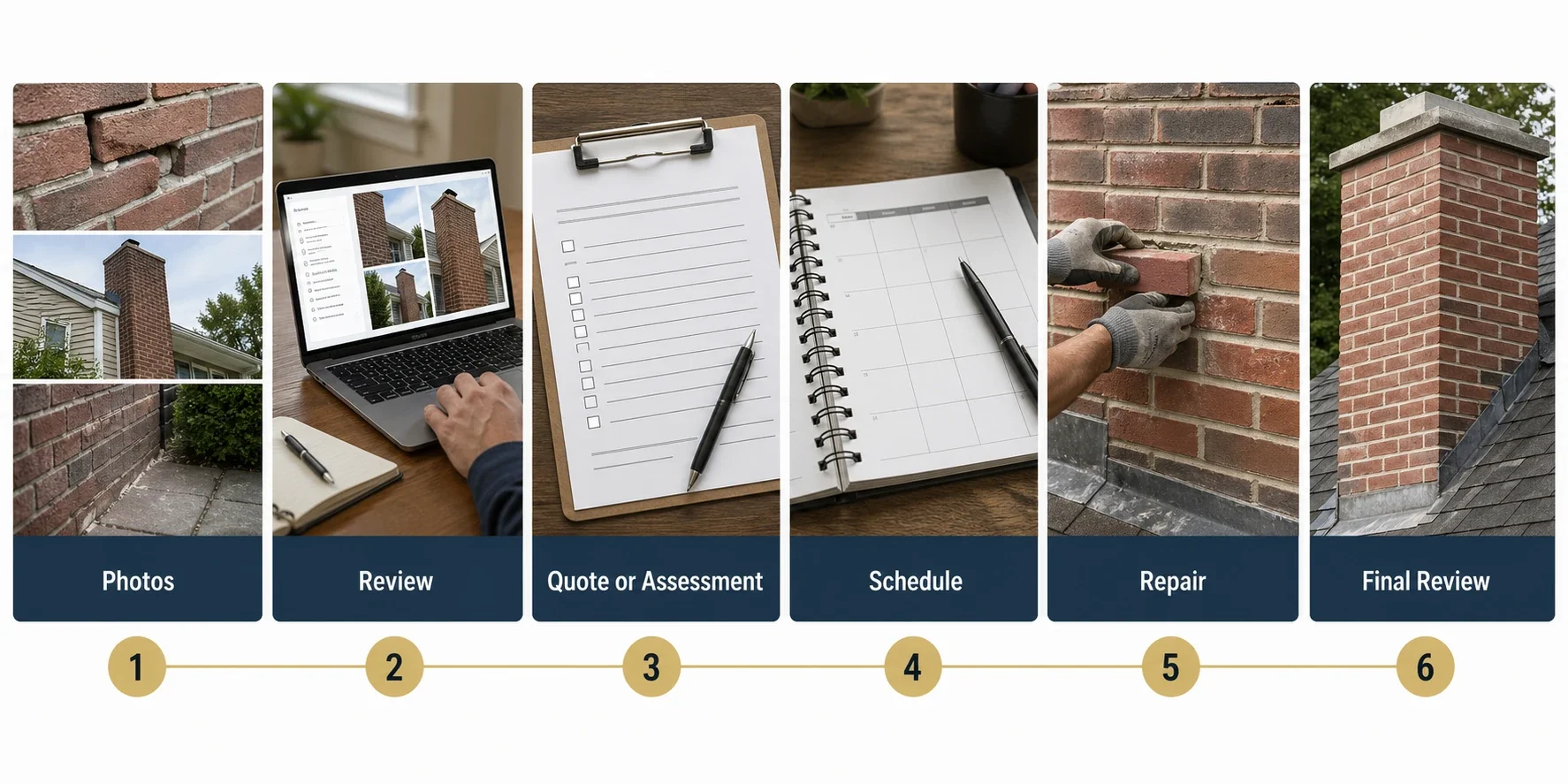
Can you quote from photos?
Short answer: Sometimes. If the visible scope, access, and condition are clear enough, a photo-based quote may be possible.
Why it matters: In most cases, this starts with photo review, but many masonry problems involve hidden layers, access limits, or deterioration that cannot be confirmed responsibly from photos alone. This is common with chimneys, foundations, failing veneer, and water-related issues.
What photos should I send?
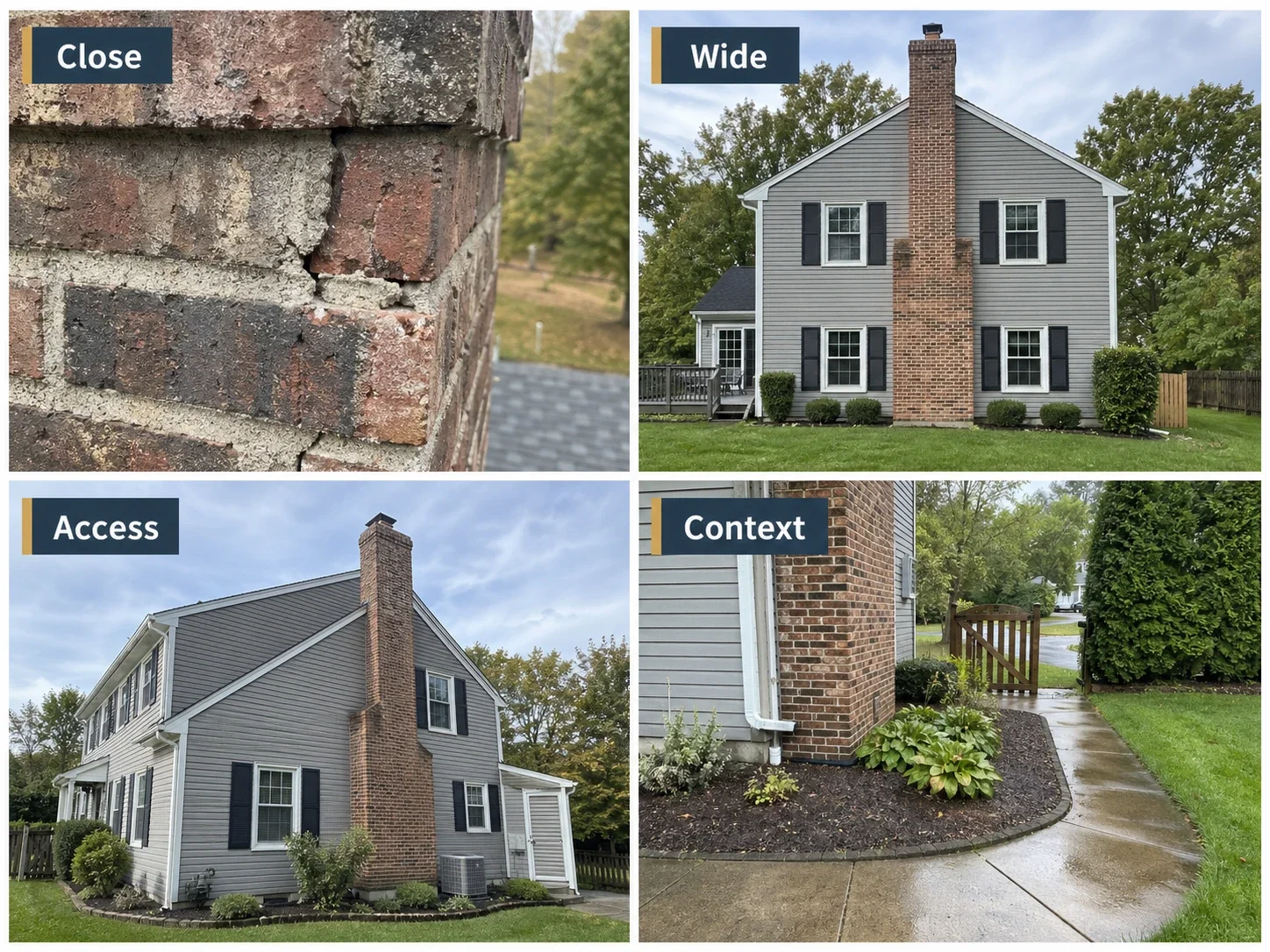
Short answer: Send close-up photos, medium shots, and wider shots showing access around the work area.
Why it matters: Close photos show the damage. Wider photos show height, grade, roof conditions, obstacles, staging space, and other details that can materially affect scope and pricing.
Is this urgent, or can it wait?
Short answer: Some masonry issues can wait for planned repair, and some should be reviewed sooner because delay can turn a smaller repair into a bigger one.
Why it matters: Water entry, active spalling, loose masonry, failing chimney tops, and movement-related damage usually get more expensive as they are left exposed to weather.
Quotes & Pricing
Questions about pricing, patch-only expectations, access burden, partial work, and when a quote is actually binding.
TrueNorth focuses on repairs that are properly defined and worth completing.
The goal is not to expand every project unnecessarily. It is to make sure the proposed scope matches the condition, addresses the intended problem, and remains practical to complete properly.
A smaller repair can make sense when it is technically sound and offers reasonable value. Where a reduced scope would leave the main cause unresolved or repeat the same setup costs without a durable result, TrueNorth will explain that before quoting the work.
Why can't every job be quoted immediately?
Short answer: Some jobs are straightforward, but others need more information before accurate pricing is possible.
Why it matters: Access, hidden conditions, material matching, repair limits, and surrounding condition can all change the real scope. Quoting too early can produce the wrong repair or misleading pricing.
When is pricing actually binding?
Short answer: Only the final written quote/agreement is the binding scope-and-price document unless otherwise stated in writing.
Why it matters: Quick opinions, ballparks, photo comments, and assessment notes can move the job forward, but they are not the binding contract.
Why can a small masonry repair still involve significant cost?
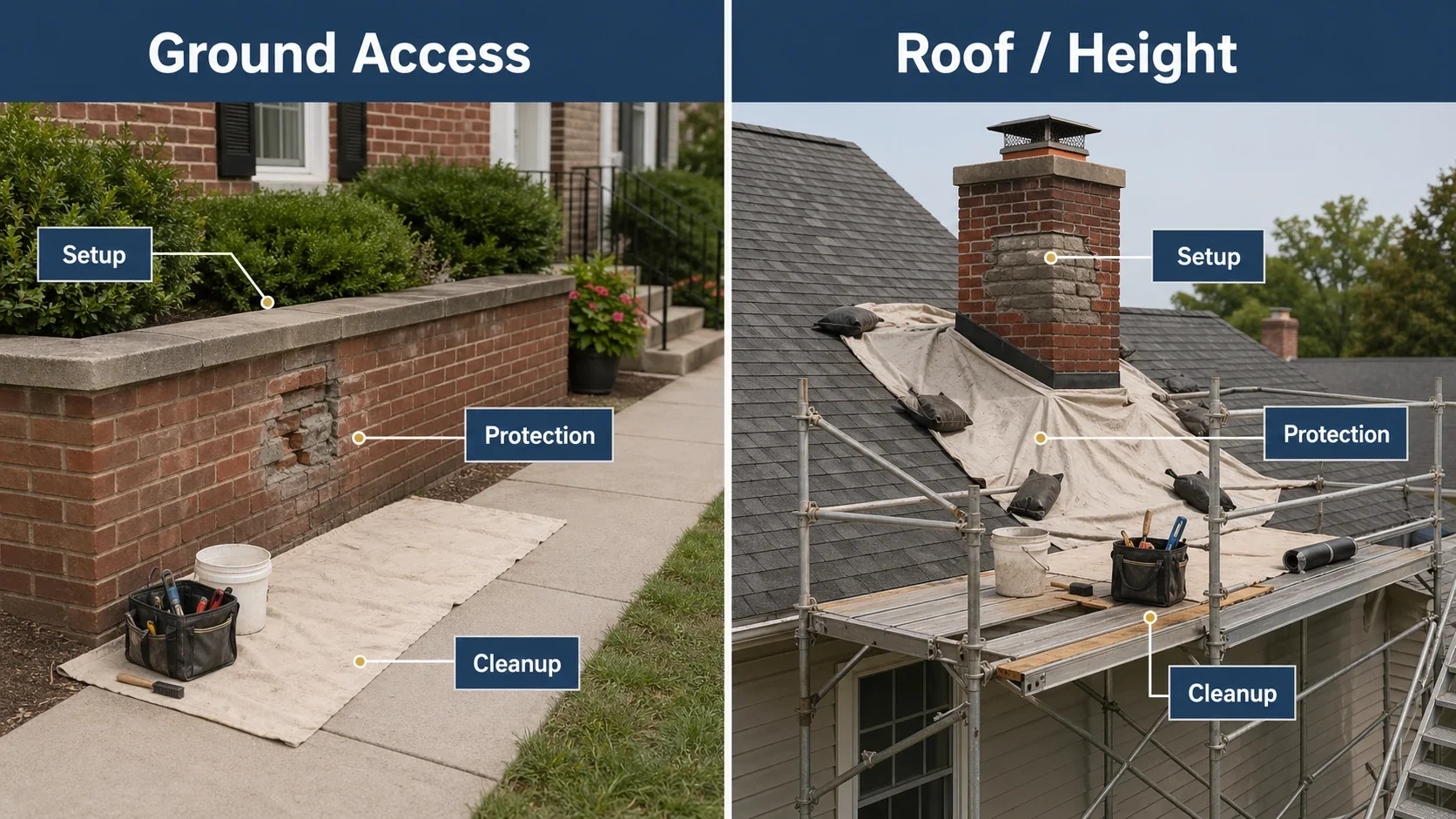
Short answer: Small masonry repairs can still carry real setup, travel, access, tool, protection, cleanup, and material burden.
Why it matters: Masonry pricing is not just about how many bricks are changed or how many joints are repointed. Access and setup are part of the real job: travel, scaffold or staging, protection, material sourcing, disposal, teardown, and cleanup can all be required before and after the visible repair.
Can this be patched or completed in phases?
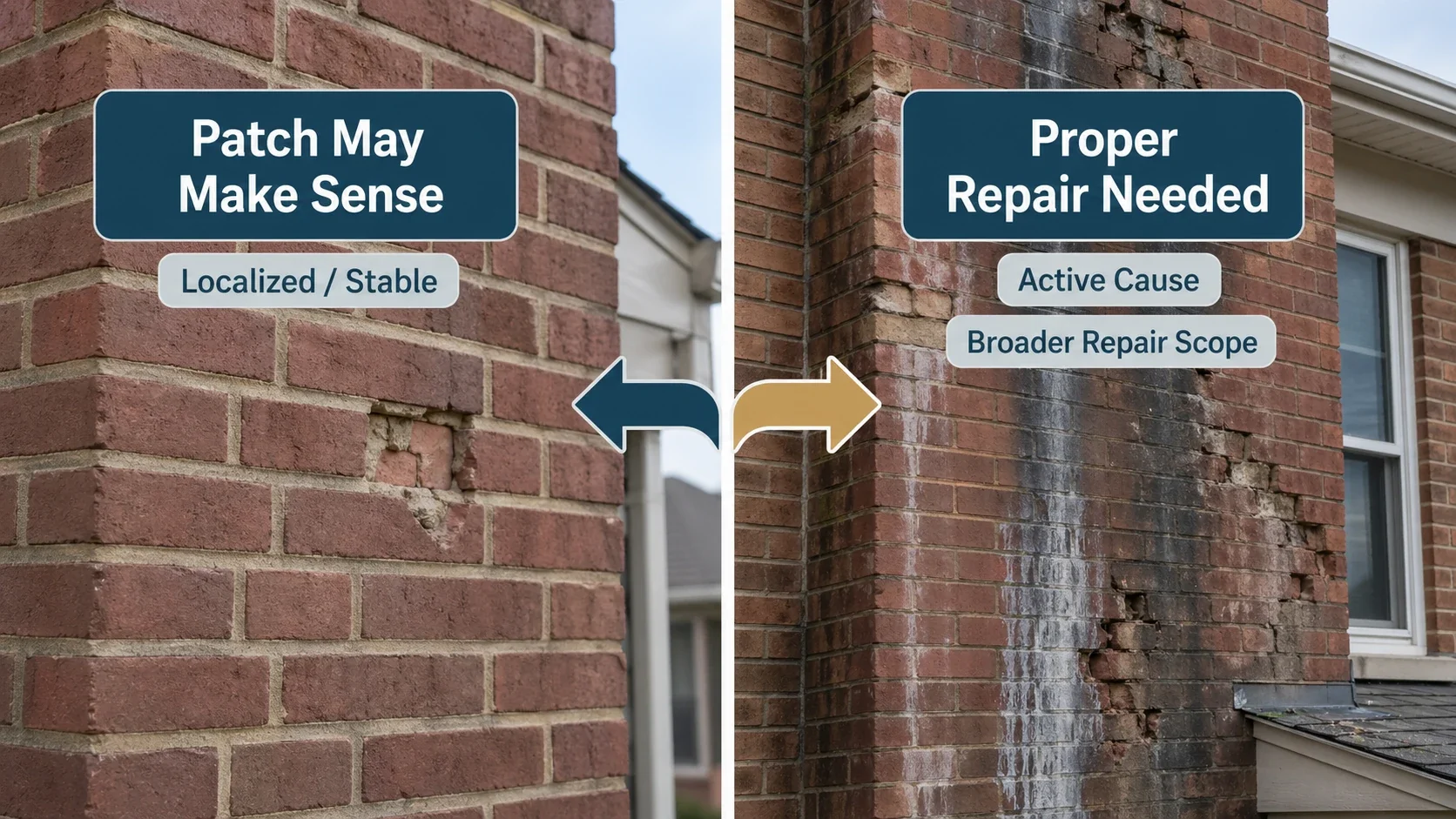
Short answer: Sometimes. A localized patch or phased plan can make sense when the work can be separated safely, the reduced scope is likely to hold, and it does not undermine future work.
Why it matters: Phasing can prioritize urgent repairs while leaving secondary work for later. Each phase still needs a defined scope and written approval. If visible damage is a symptom of broader moisture, movement, cap, substrate, or access problems, a quick patch may fail without resolving the cause.
When is a partial repair not worth doing?
Short answer: Partial repair stops making sense when the surrounding condition, hidden cause, or repeated setup burden makes the reduced scope poor value.
Why it matters: If the same access, scaffold, chimney opening, or preparation work has to be repeated later, a smaller repair can end up costing more in the long run while leaving the real problem in place.
Chimneys
Questions about chimney caps, hidden internal damage, rebuild decisions, roof access, and why two similar-looking chimneys can price very differently.
Why do chimney repairs vary so much in price?
Short answer: Chimney pricing depends on height, roof access, scaffold burden, cap condition, visible deterioration, material choice, and whether deeper shell, flue, or core work is involved.
Why it matters: A chimney is a layered system, not just a stack of visible brick. This is a common pattern with older chimneys: the cap, shell, flue path, roof conditions, and safe access can all change the real repair path.
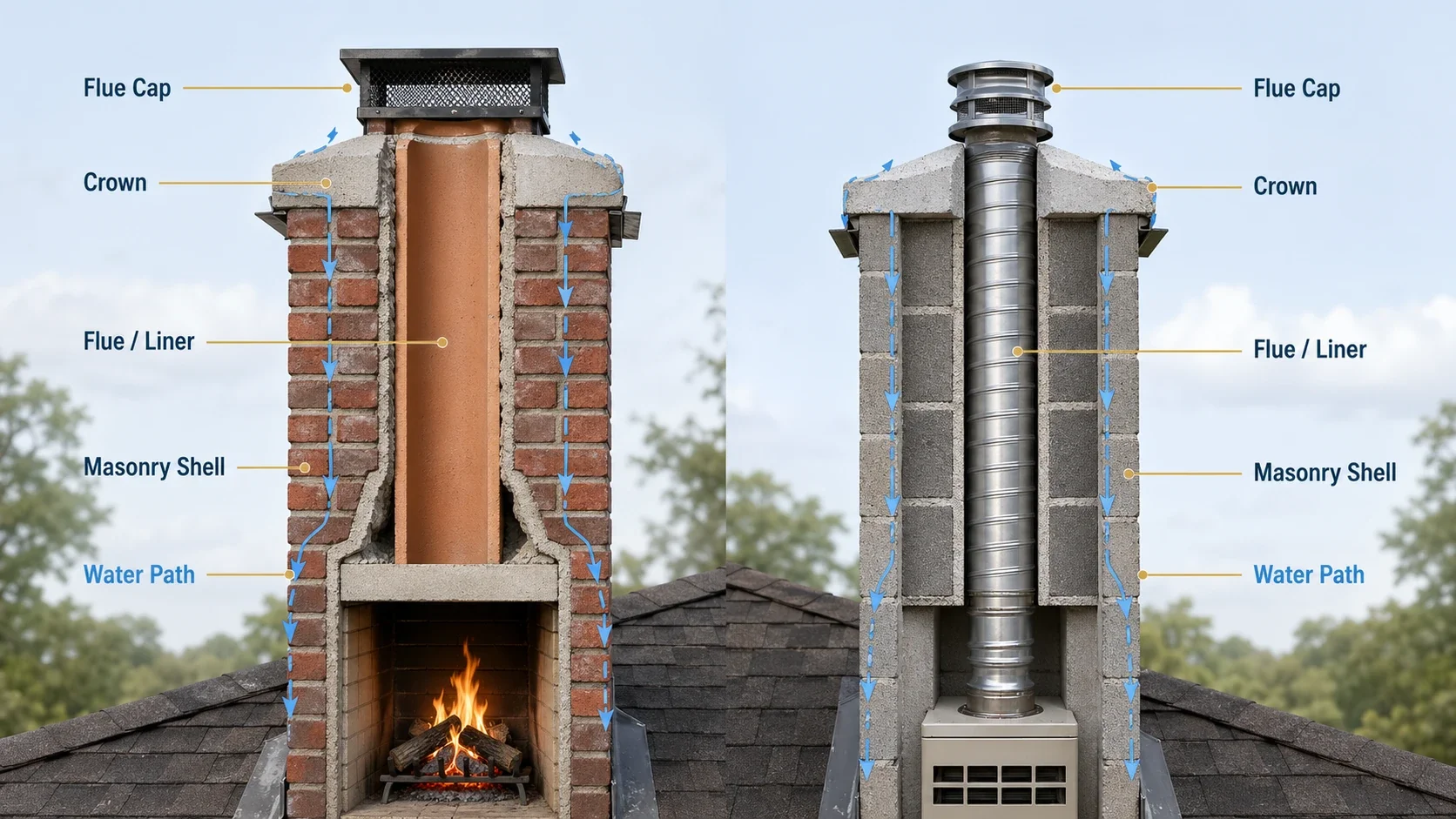
When is a chimney cap-only repair reasonable?
Short answer: Cap-only repair is reasonable when the rest of the chimney is still stable enough that replacing the top protection actually solves the main problem.
Why it matters: This is common with chimney repairs: if the shell below, the core, or the flue path is already failing, replacing only the cap can leave the real deterioration untouched.
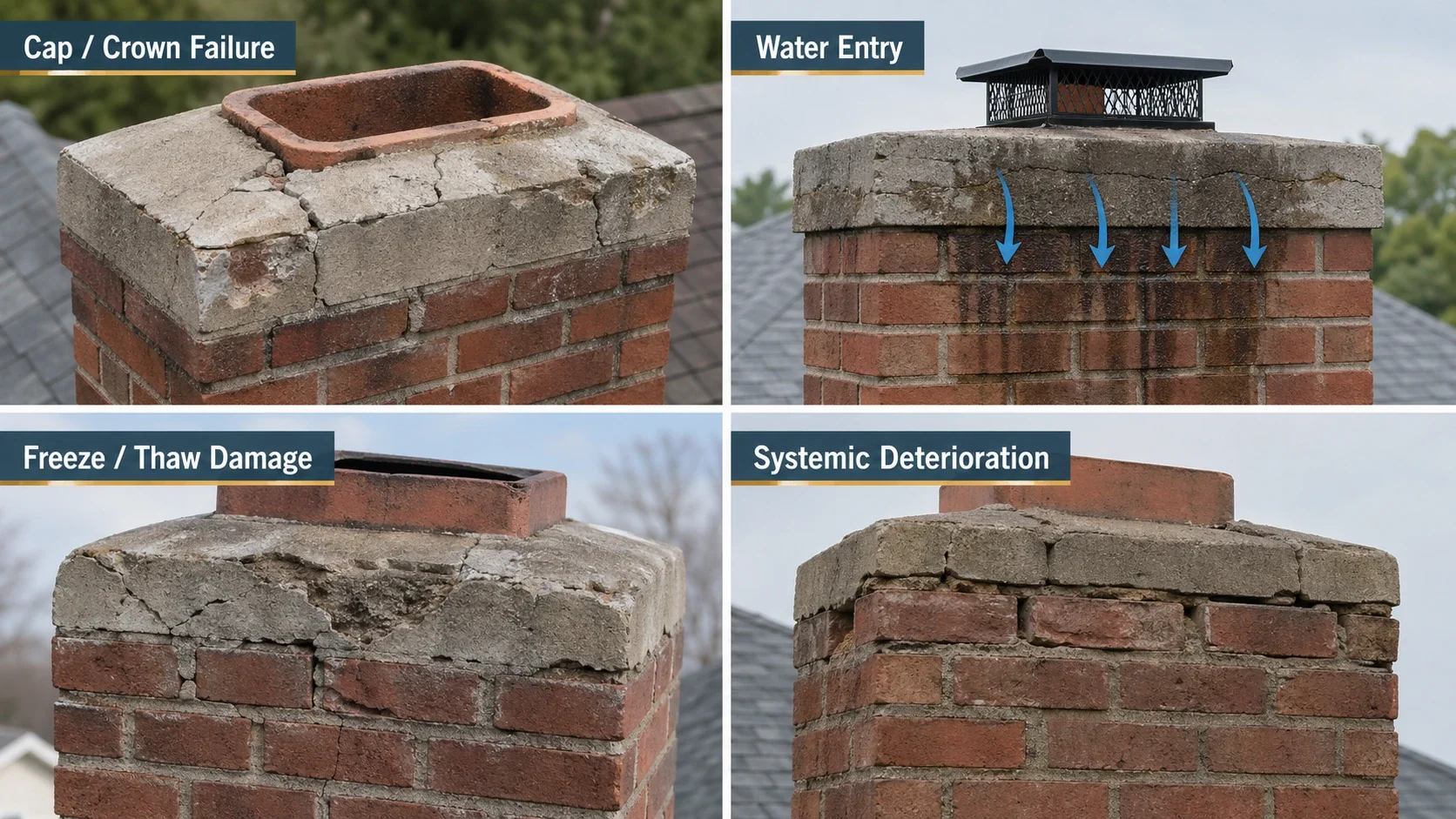
When is a chimney rebuild the better value?
Short answer: A rebuild becomes the better value when deterioration is already broad enough that repeated patching is likely to chase the same failure again.
Why it matters: If the top courses, shell, cap, and surrounding material are all compromised, a larger correction can be more honest and more economical than repeating limited repair against a failing system.
Why does a steep or metal roof change the price?
Short answer: Because safe roof access is often one of the biggest drivers of chimney repair burden.
Why it matters: Steep pitch, slippery roofing, awkward rooflines, dormers, limited staging, and scaffold needs all increase setup time, safety planning, and handling burden before the actual chimney work begins.
Why can hidden flue or core issues change the scope?
Short answer: Because internal chimney conditions cannot always be confirmed from the ground or from photos.
Why it matters: Visible exterior damage may only be the outer sign of deeper deterioration. If hidden internal issues are found, the repair path may need to change and deeper work is not included unless it is specifically reviewed and priced.
Brick Repair
Questions about spalling brick, replacement scope, matching limits, and realistic visual expectations.
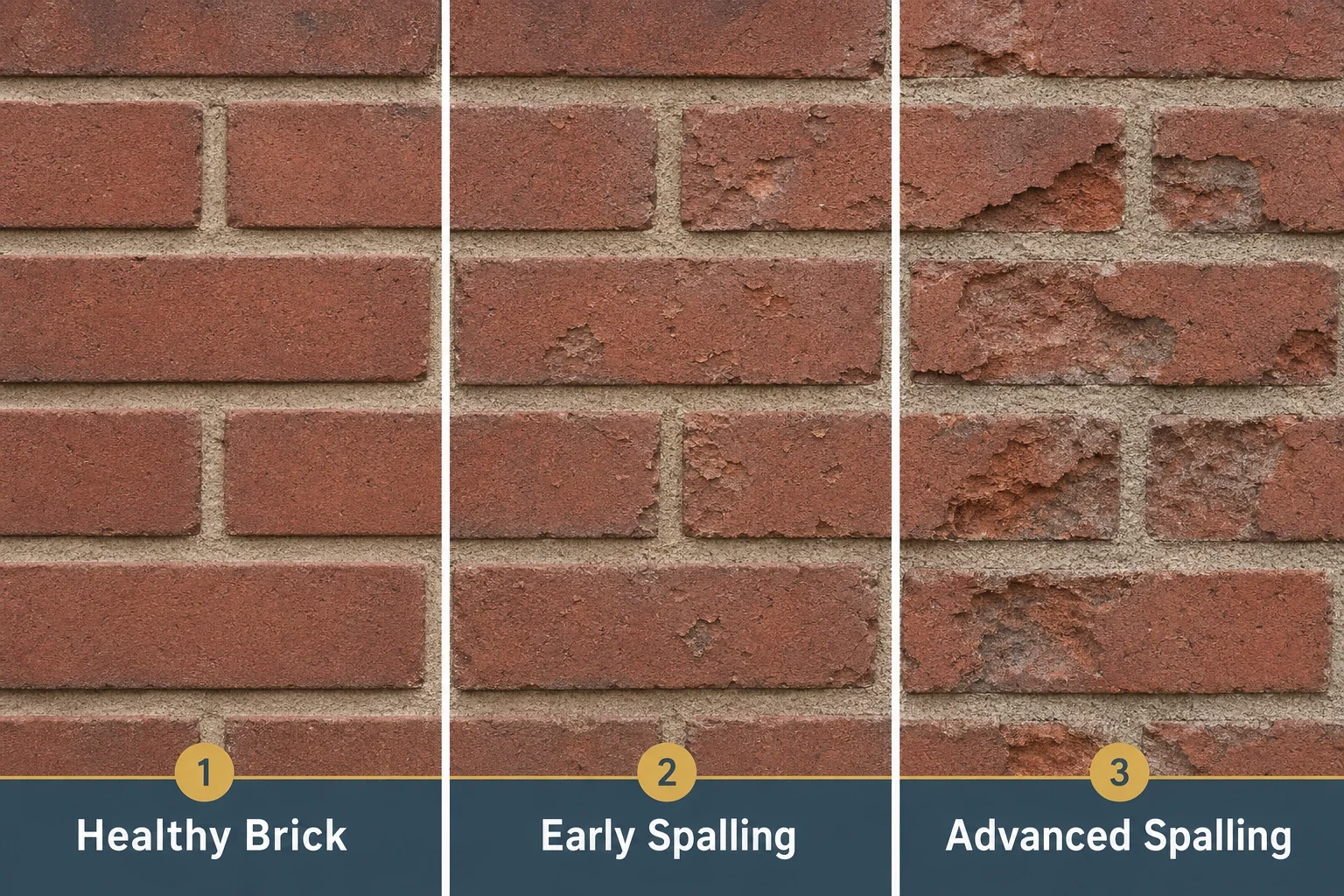
What causes brick faces to pop off?
Short answer: Brick faces usually pop off because moisture gets into the brick and freeze-thaw cycles break the face apart.
Why it matters: This is common with older brick. Spalling is often a symptom, not the whole problem. Failed caps, water entry, chronic saturation, and drainage issues can all contribute.
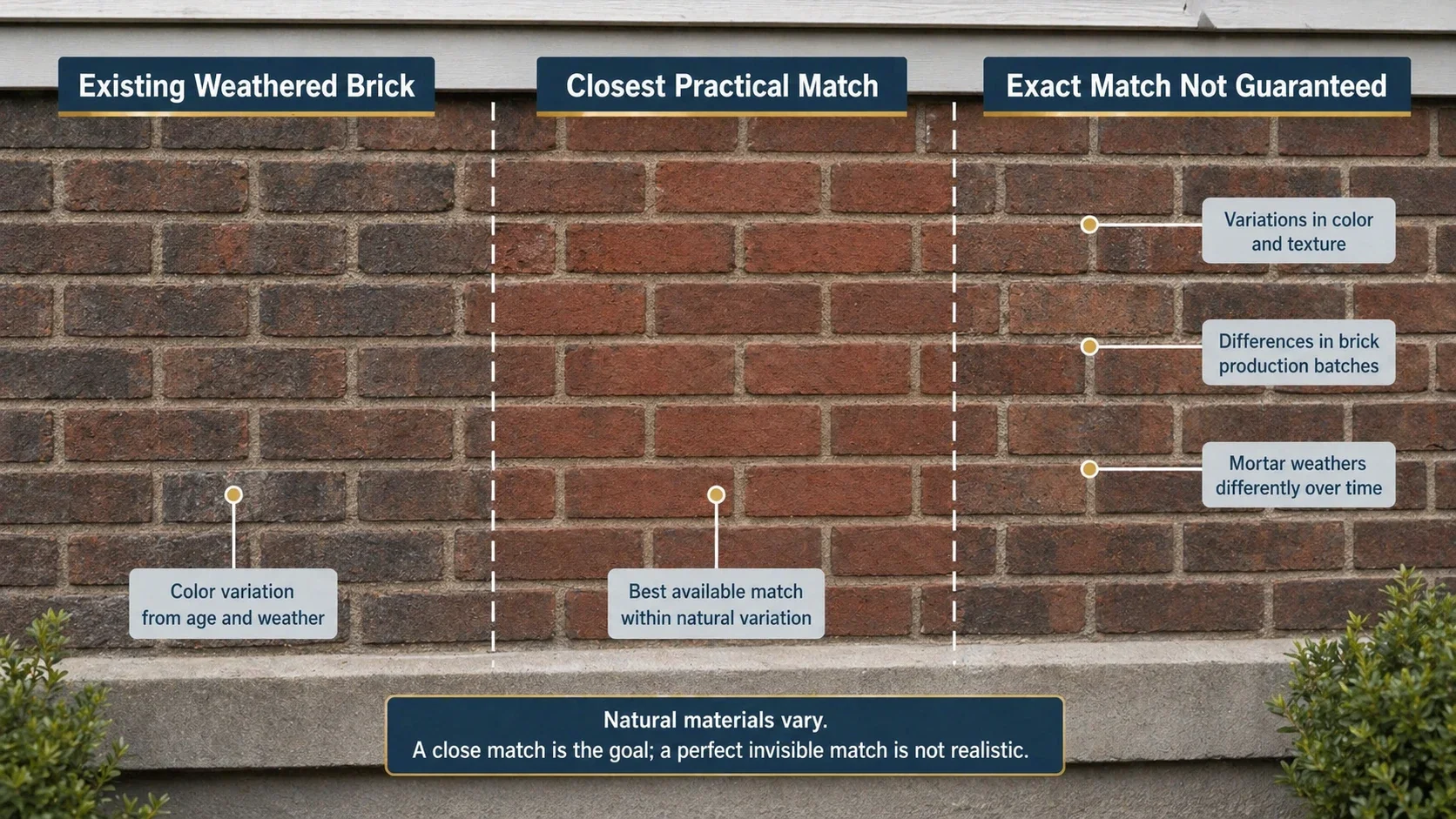
Can you match my existing brick, and will the repair blend in?
Short answer: The goal is the closest practical match, but exact matching is not guaranteed.
Why it matters: This is something we see often with older brick. Brick colour, texture, size, finish, age, mortar, and weathering vary over time and across suppliers. A localized repair can be structurally right and visually improved without disappearing perfectly; new materials may settle in visually over time.
When does localized brick replacement stop making sense?
Short answer: Localized replacement stops making sense when the surrounding masonry is also failing or the root cause is broader than the few visible bricks.
Why it matters: If widespread moisture exposure, failing caps, movement, or deteriorated backing is driving the damage, replacing only the most obvious bricks may not be durable or good value.
Parging & Foundation
Questions about failing parging, water-related misunderstandings, and when foundation masonry needs deeper correction.
Why does parging come off in sheets?
Short answer: Parging usually comes off in sheets because the bond behind it has failed.
Why it matters: Moisture, poor preparation, unstable substrate, movement, freeze-thaw cycles, or previously failing layers underneath can all cause new parging to release again.
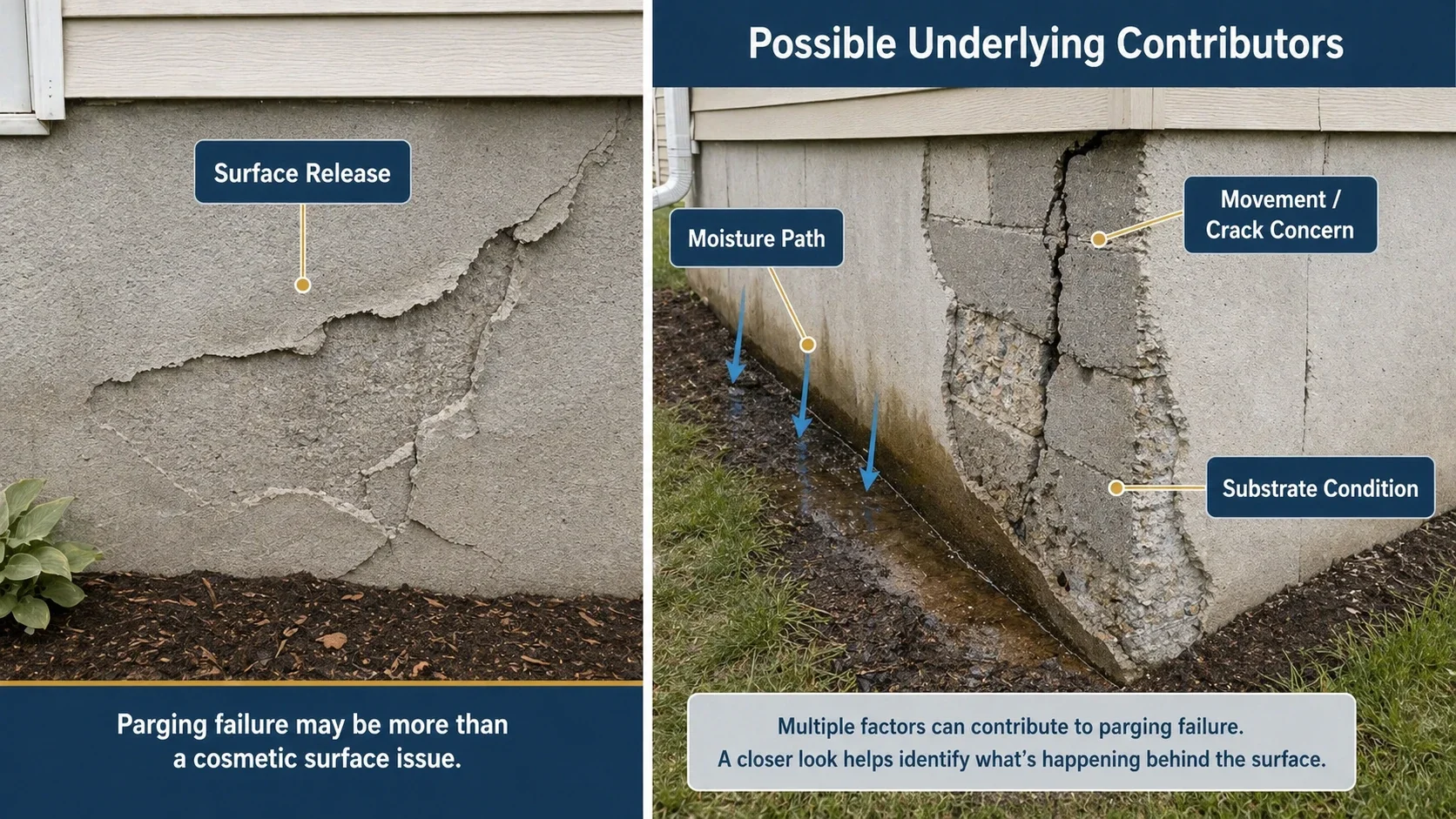
Is parging cosmetic or protective?
Short answer: It can be both, but only when it is applied onto a suitable, properly prepared surface.
Why it matters: Parging can improve appearance and help protect masonry surfaces, but it is not a magic layer that fixes deeper instability or active water-management problems on its own.
Why won't parging fix active water entry?
Short answer: Because parging is not a full waterproofing or drainage system by itself.
Why it matters: If water is getting in because of grading, drainage, cracks, hydrostatic pressure, flashing problems, or substrate failure, new parging alone does not remove that cause.
When does foundation masonry need deeper repair?
Short answer: Deeper repair may be needed when there is movement, loose block or stone, structural cracking, water damage, or unstable backing behind the visible surface.
Why it matters: Surface repair alone is not enough when the masonry itself is failing. The correct path depends on what is actually happening behind the visible face.
Stone & Veneer
Questions about thin stone, full-bed stone, veneer over brick, substrate prep, and material selection.
Do you install thin stone and full-bed stone, and how do they differ?
Short answer: Yes. TrueNorth handles both thin-stone veneer and heavier full-bed masonry where the project and substrate are appropriate.
Why it matters: Thin stone is a veneer system, while full-bed stone behaves more like traditional wall construction. They differ in weight, support needs, preparation, handling, labour sequence, and installation requirements.
Can stone veneer be installed over existing brick?
Short answer: Sometimes, but the existing brick and substrate conditions need to be evaluated first.
Why it matters: Installing over loose, wet, painted, coated, or unstable masonry can create problems later. The existing surface must be suitable and properly prepared for the selected veneer system.
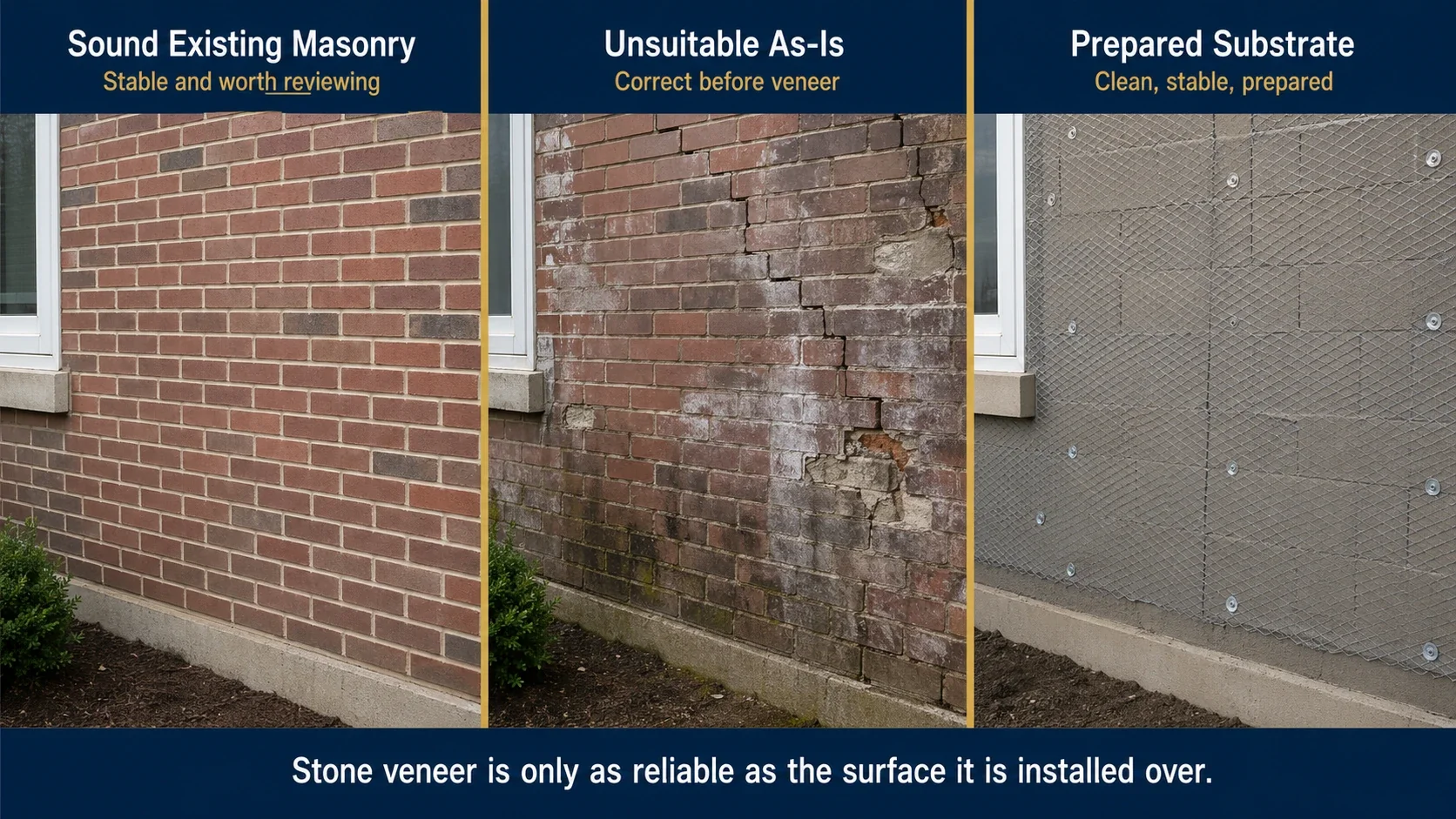
Why does substrate preparation matter?
Short answer: Because stone systems are only as reliable as the surface they are bonded or anchored to.
Why it matters: Backing stability, moisture control, fastening, flashing, and the correct prep layers all affect whether the finished work will hold properly over time.
What is the difference between natural stone and manufactured stone?
Short answer: Natural stone is quarried material, while manufactured stone is a cast veneer product made to replicate a stone look.
Why it matters: They differ in weight, thickness, visual variation, installation detail, and cost. The right choice depends on the substrate, the look you want, and how the project needs to be built.
Assessments
Questions about when paid onsite assessments are needed, what they are for, and what they are not.
When is an onsite assessment needed?
Short answer: An onsite assessment is needed when photos do not provide enough information to define the scope responsibly.
Why it matters: Chimneys, foundations, water-related damage, complex access, movement, and concealed deterioration often need a closer contractor-level review.
What makes a job unsafe to quote from photos?
Short answer: A job is not safe to quote from photos when the real scope depends on conditions that are hidden, inaccessible, or too uncertain to judge remotely.
Why it matters: Unknown chimney internals, failing backing, concealed water damage, unclear access, or mixed symptoms across multiple assemblies can all make a remote quote too speculative.
Is the assessment fee credited toward the work?
Short answer: Yes. Under the current policy, the pre-tax assessment fee is credited toward approved repair work.
Why it matters: The onsite assessment is a paid contractor service, but when the project moves forward it becomes part of the repair-definition process rather than a separate sunk cost.
Why isn't an assessment an engineering report?
Short answer: Because it is a contractor condition evaluation for repair planning, not structural engineering or professional design certification.
Why it matters: TrueNorth can assess visible masonry condition and recommend practical repair direction. Engineering, structural design, and certification remain outside the normal masonry-contractor scope unless separately provided.
Warranty & Hidden Conditions
Questions about workmanship warranty, exclusions, concealed damage, and why scope can change after work begins.
What does workmanship warranty mean?
Short answer: Completed work includes a 3-year workmanship warranty.
Why it matters: A workmanship warranty applies to the work performed by TrueNorth. Manufacturer warranties for supplied materials remain separate.
What is not covered under warranty?
Short answer: Hidden conditions, work by others, unrelated systems, movement outside the quoted scope, and conditions not included in the written repair scope are not automatically covered.
Why it matters: A workmanship warranty covers the work that was actually performed. It does not automatically extend to unrelated water issues, substrate failures, non-masonry deficiencies, or expanding damage outside the quoted area.
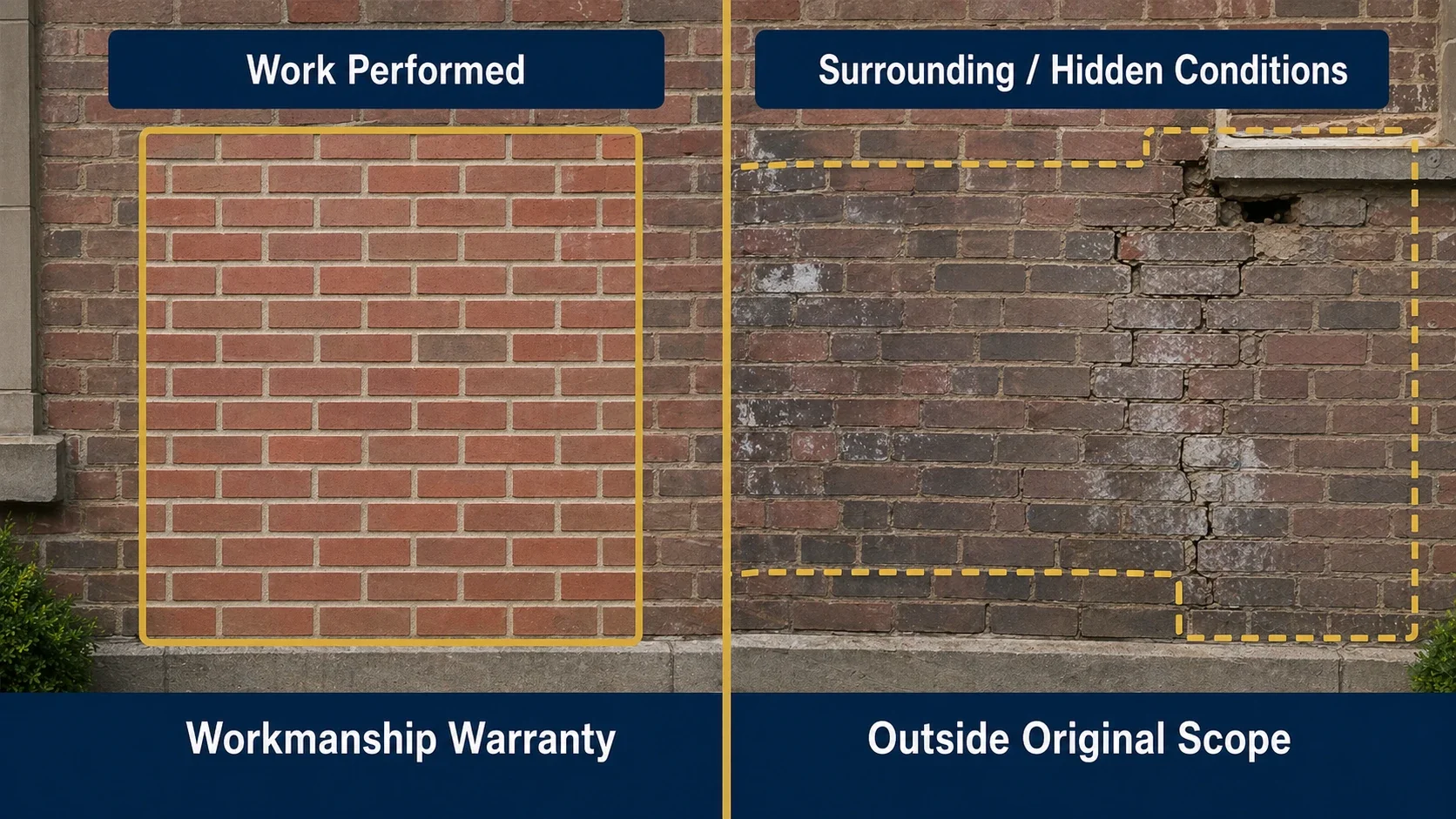
Why are hidden conditions separate from warranty?
Short answer: Because concealed damage is not the same thing as a defect in the work that was actually performed.
Why it matters: Masonry systems often contain layers you cannot fully see until work opens up the area. A workmanship warranty does not automatically absorb unrelated concealed deterioration that was outside the original visible-condition assumptions.
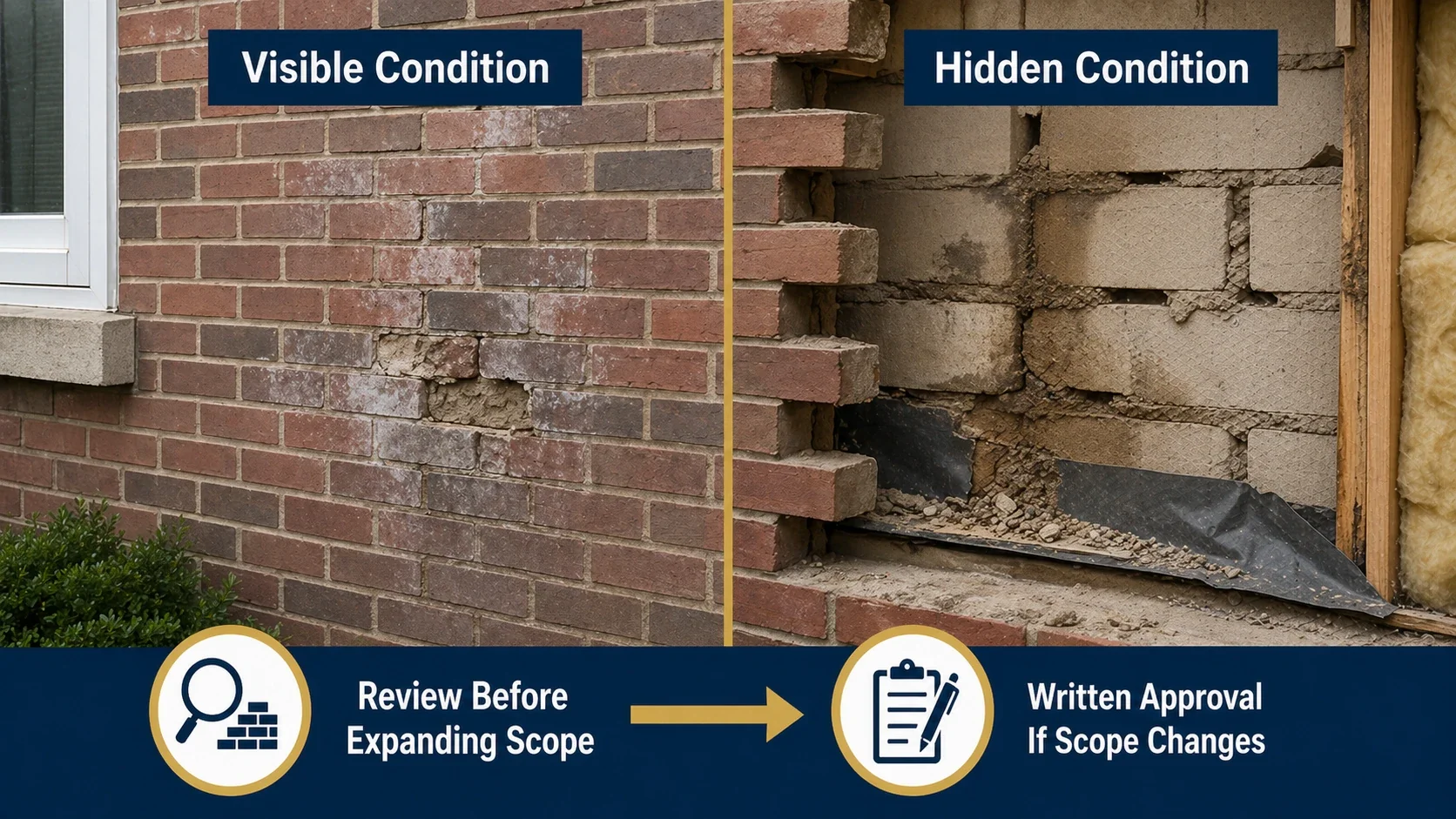
What happens if more damage is found?
Short answer: The work may pause so the newly exposed condition can be reviewed and the repair path adjusted if needed.
Why it matters: This is usually a sign that the visible issue may not be the whole issue. Concealed deterioration can change both the amount and the type of work required. If the visible-condition assumptions prove wrong, revised scope and pricing may need written approval before proceeding.
Scheduling & Weather
Questions about booking windows, weather delays, interrupted schedules, and site access expectations.
How far ahead are you booking?
Short answer: Scheduling depends on season, weather, current workload, material timing, and the size of the project.
Why it matters: Masonry work is weather-sensitive, and start windows can move as earlier work, actual site conditions, and suitable weather change.
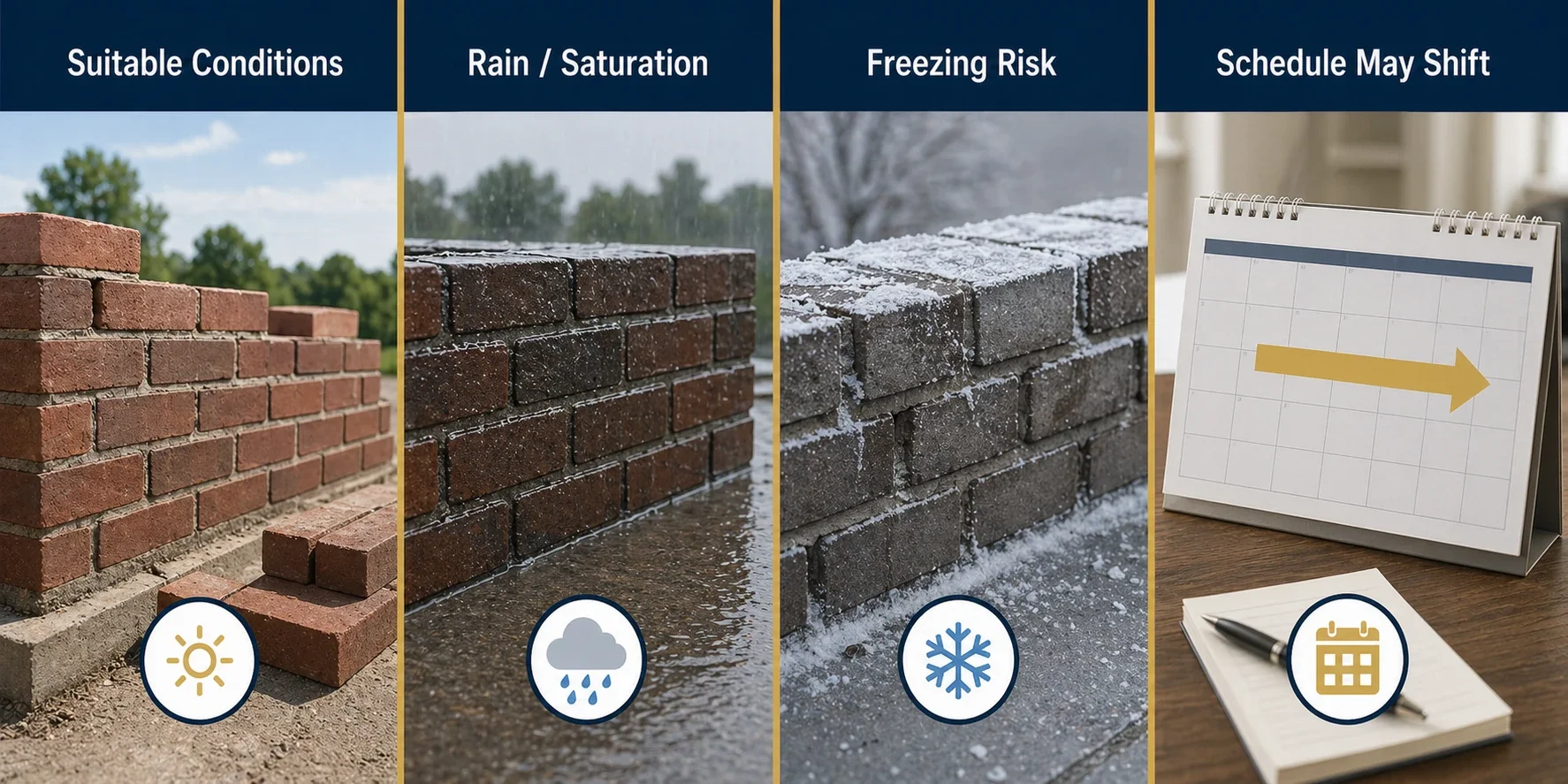
Why can weather delay or interrupt masonry work?
Short answer: Because mortar performance, curing, safety, and material handling are all affected by weather.
Why it matters: Rain, freezing temperatures, wind, saturated surfaces, and poor curing conditions can compromise the work if the job is pushed through at the wrong time. The schedule may need to pause, shift, or resume when suitable conditions return rather than risk durability or finish quality.
Do I need to be home for the work?
Short answer: Not always. Exterior work can often be arranged without the client being home, depending on access and job details.
Why it matters: Some projects only need exterior access, while others need discussion, power or water coordination, interior access, or approval of details before work starts.
Service Area
Questions about location, travel, viability, and why distance affects some jobs more than others.
Where does TrueNorth work?
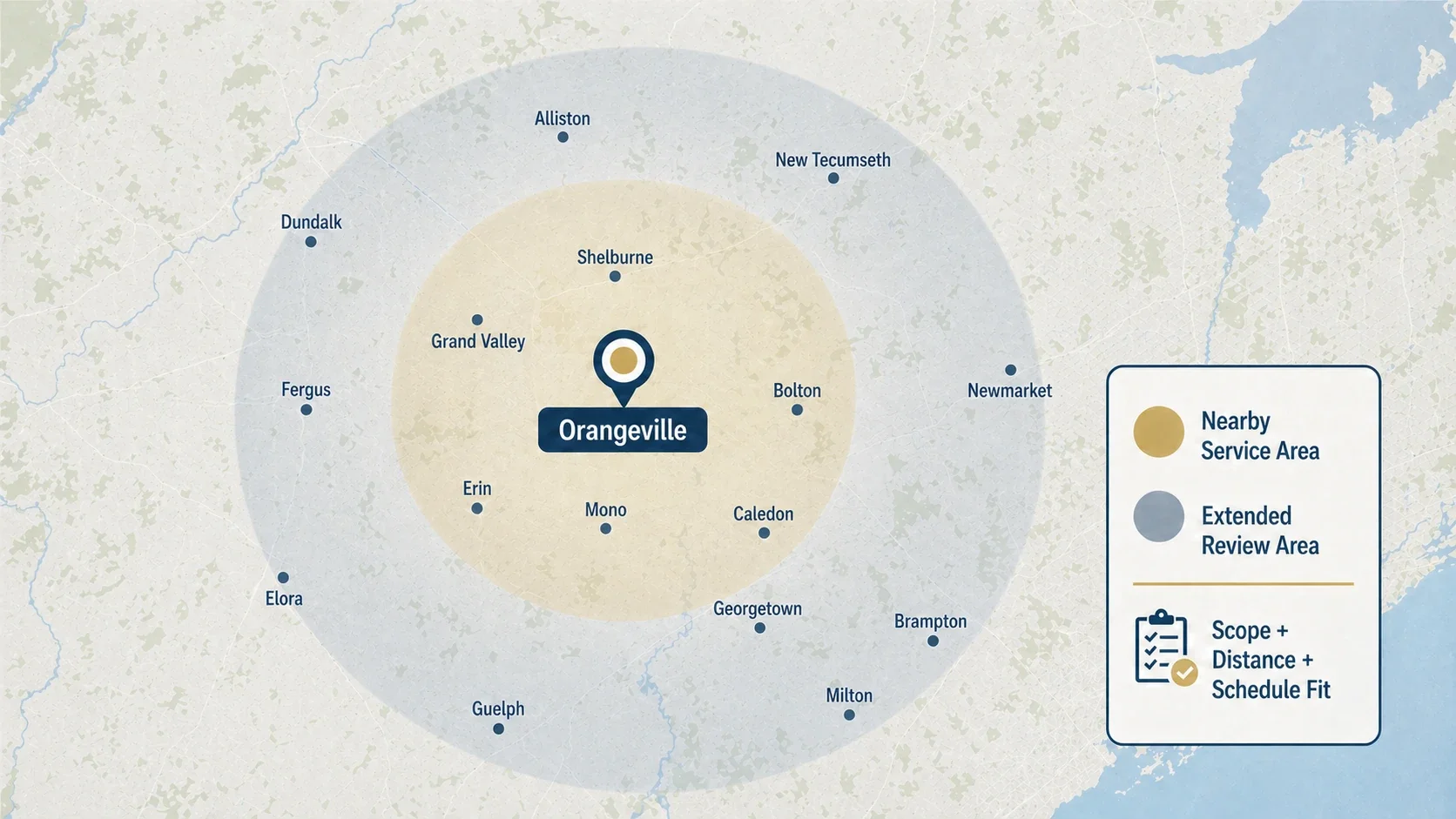
Short answer: TrueNorth operates from Orangeville and works throughout nearby communities. Travel outside Orangeville and farther service-area projects are considered where distance, scope, and scheduling practicality fit.
Why it matters: If you are asking, “Do you serve my town?”, the answer depends on real travel and viability planning, not a blanket promise to take every job everywhere.
How does distance affect whether a project is practical?
Short answer: Travel, setup, and scheduling burden make up a bigger share of the work when the repair scope is small or the project is farther away.
Why it matters: Distance matters more for small jobs because a modest repair farther away can carry disproportionate travel burden compared with a larger project nearby. Distance, scope, setup, and schedule are reviewed together before service is confirmed.
No matching answers yet. Try a broader term, switch categories, or contact TrueNorth if your question is specific to your property.