

Chimney Repair vs Rebuild: What Actually Makes Sense?
Many chimney problems look similar from the ground. But repair versus rebuild depends on the real condition of the chimney, not just the first visible damage.
This is usually not a choice between doing the smallest thing possible and doing the biggest thing possible. The real question is which level of work actually makes sense for the condition in front of you.
Why This Question Matters
Homeowners often assume the chimney either just needs a repair or must need a full rebuild. In reality, the honest answer is often somewhere in between and depends on how far the deterioration has actually spread.
If the wrong path is chosen too early, the result can be repeat repairs, repeated setup cost, and ongoing deterioration that was never really addressed.
If cost is the first concern, read why chimney repair costs vary. The masonry decision still comes down to the condition of the shell, the height and access, and how much sound work remains.
When a Chimney Repair Makes Sense
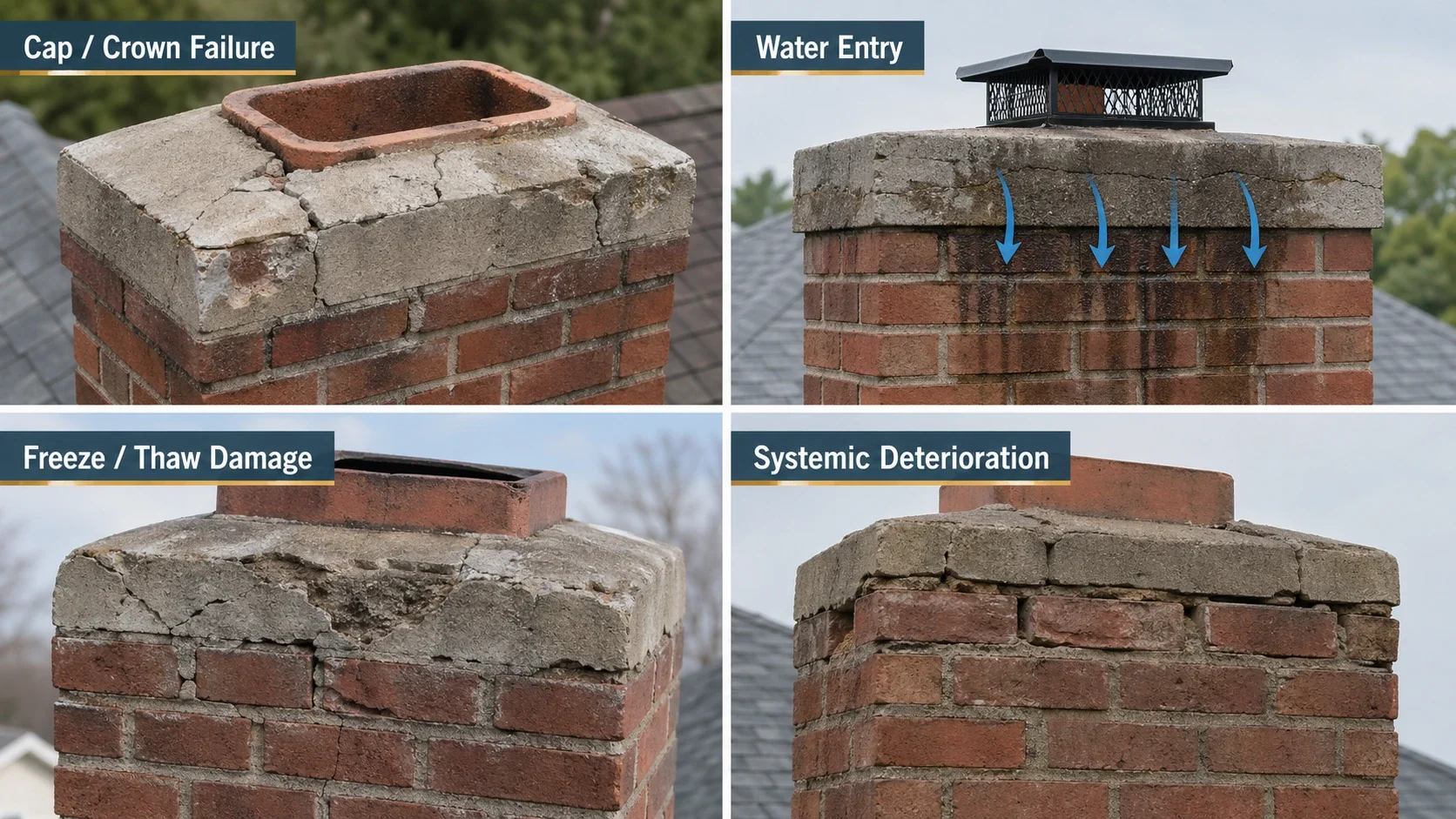
Repair is more reasonable when the deterioration is still localized, the cap failure has not spread deeply into the structure, the damaged brick area is limited, and the chimney still appears stable overall.
That usually means the visible problem can be corrected without chasing failure through multiple sections of the chimney. It also helps when access and setup do not dominate the job so heavily that a limited repair stops being practical value.
Important boundary: A localized repair may make sense, but that does not mean the rest of the chimney is being guaranteed beyond the condition that can actually be confirmed at quote time.
When a Rebuild Becomes the Better Value
Rebuild becomes more reasonable when deterioration is widespread, multiple sections are failing together, top courses are unstable, water entry has already progressed, or the same access/setup burden would likely have to be repeated again later.
A larger repair is not always about doing more work — it is often about not repeating the same work again later.
This does not mean every bad-looking chimney needs a full rebuild. It means there is a point where patching smaller areas stops being honest value because too much of the system is already involved.
If you want to compare those thresholds visually, view the Masonry Repair Visual Guide for repair-threshold examples.
Why Partial Repairs Often Don't Save Money
Chimney work is heavily influenced by setup and access. Roof conditions, height, safety planning, scaffold or staging burden, teardown, and debris handling can make up a large part of the job before the actual masonry correction even starts.
That is why doing part of the work now and the rest later is often not real savings. The same access burden may have to be paid for twice.
If that part of the decision is the sticking point, it also helps to see why small masonry repairs can still cost more than expected.
The Hidden Factor: What Can't Be Seen Yet
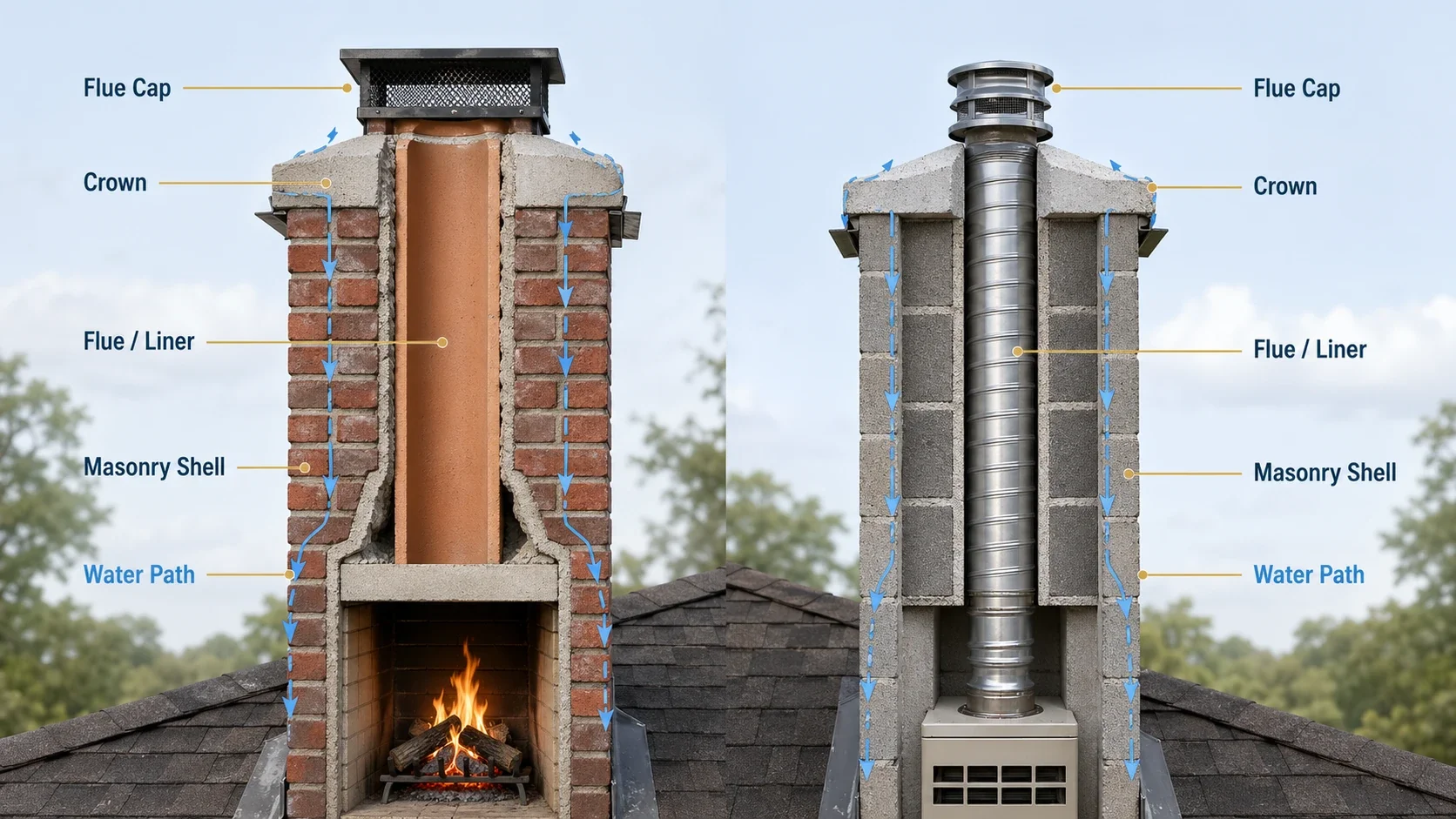
Some chimney decisions cannot be made from surface appearance alone. Internal flue condition, core deterioration, moisture pathways, and concealed instability can change what the responsible repair path really is.
If the question is shifting from outer masonry failure to what is happening inside the chimney path, it also helps to read more about chimney repair versus flue replacement.
Sometimes clear photos are enough to sort out the likely next step. Sometimes an onsite assessment is the better path because the important facts are still uncertain.
If that is the question you are really trying to answer, read when assessment makes more sense than a quote path.
What This Means For Your Project
If damage is localized and stable, repair may make sense.
If deterioration is broader or uncertain, rebuild may be better value.
If key conditions are unclear, assessment is the correct next step.
Related Questions
What To Do Next
You do not need to decide on your own whether the chimney is a repair case or a rebuild case. A few clear photos and a short description are usually enough to point the job toward the right next step.