

Masonry Assessment vs Quote: When Each One Makes Sense
Some masonry repairs can be reviewed from photos. Some need an onsite assessment first. The difference depends on visible scope, access, hidden-condition risk, and whether the repair can be defined responsibly.
This usually becomes a real question when the issue looks serious enough that you want clarity, but not every project needs the same first step.
Why This Question Matters
Many homeowners expect every masonry problem to be quoted immediately. That works only when the visible scope, the surrounding condition, and the access are clear enough to define the repair responsibly.
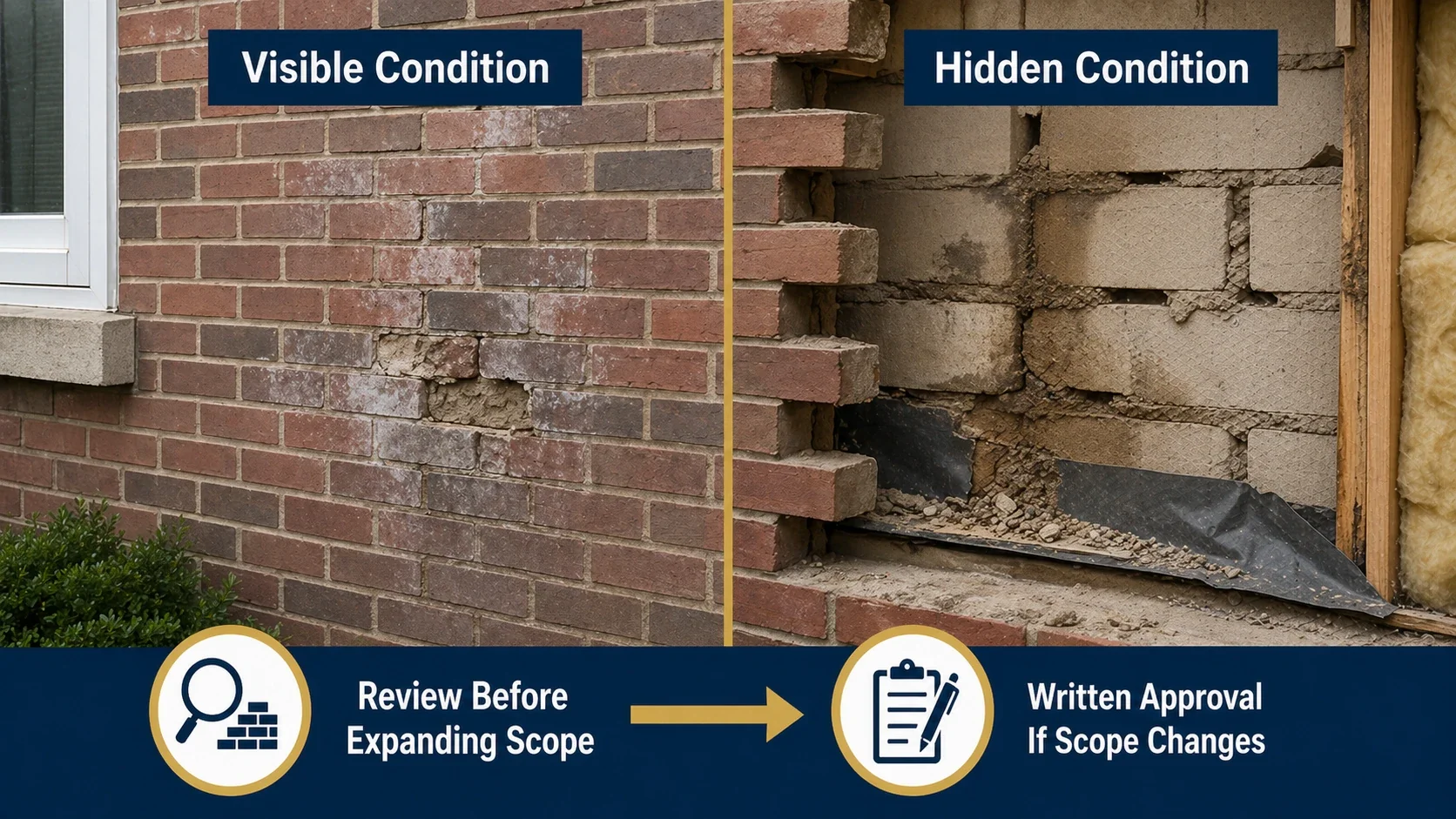
Masonry problems can involve hidden damage, unstable backing, water entry, chimney internals, awkward access, or broader deterioration than the visible surface suggests. Guessing too early creates weak scope and weak pricing.
Important boundary: Photo review and assessment both help define the job, but only the final written quote/agreement is binding.
When Photos May Be Enough
Photos may be enough when the damage is clearly visible, the access looks straightforward, the repair is localized, and the surrounding masonry gives enough context to judge what is actually happening.
That is more common on lower hidden-condition-risk repairs where the work area, adjacent materials, and working conditions can be understood from clear close and wide photos together.
If that is the question you are trying to answer first, read more about when masonry can be quoted from photos.
When an Onsite Assessment Makes More Sense
An onsite assessment makes more sense when the important facts are still uncertain. That is common with chimney issues, foundation or parging moisture concerns, movement or cracking, hidden deterioration, unclear access, and larger or phased repair decisions.
An assessment is a contractor condition evaluation for repair planning and quotation. It is not an engineering report.
If engineering, structural design, or professional certification is needed, that is outside normal masonry-contractor scope unless specifically arranged.
Important: Assessment Fee Credit
An onsite assessment is a paid contractor service. If approved repair work moves forward, the pre-tax assessment fee is credited toward that work.
The assessment helps define the scope, access, and repair path before pricing is locked in. When the project proceeds, it is part of the repair-definition process rather than a separate sunk cost.
What Happens After Assessment
After the assessment, the visible and accessible conditions are reviewed, the likely repair path is clarified, and a formal quote/agreement is prepared where appropriate.
Assessment notes and findings help move the job forward, but only the final written quote/agreement is the binding scope-and-price document.
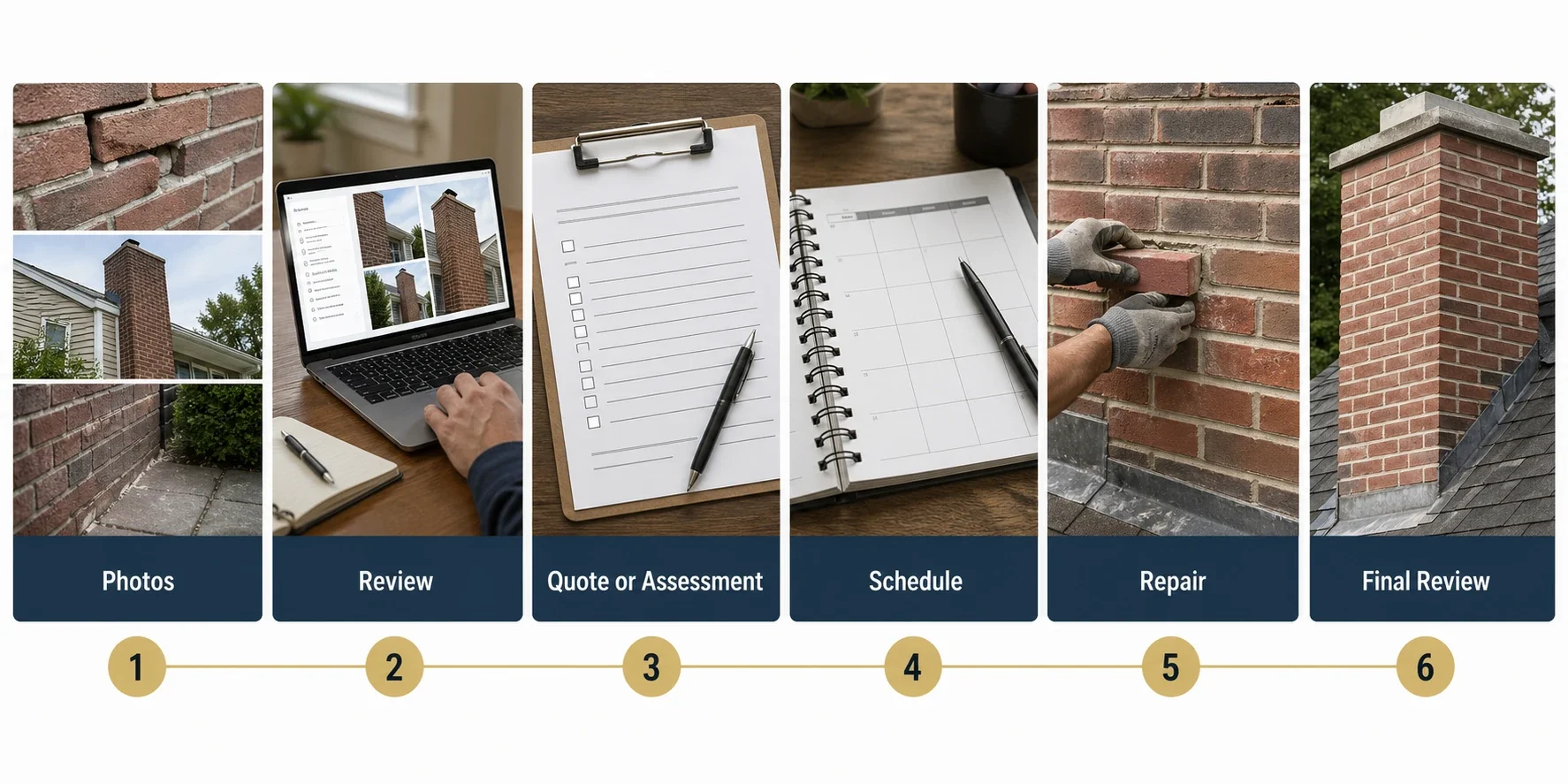
If you are trying to understand what happens after that review, it also helps to see how the masonry repair timeline usually unfolds and how TrueNorth keeps project decisions clear.
What This Means For Your Project
If photos show the issue clearly, start with intake and photo review. That is often enough to determine whether the job looks quote-ready.
If the important facts are hidden or uncertain, assessment is the responsible next step.
If the issue is chimney-related and pricing is the main concern, it also helps to read why chimney repair costs vary. If the repair looks smaller than the price path suggests, see why small masonry repairs can still cost more than expected.
Related Questions
What To Do Next
You do not need to decide upfront whether the job is quote-ready or assessment-first. A few clear photos and a short description are usually enough to determine the right next step.