

Masonry Repair Timeline: How Long the Process Takes
Masonry repair timelines depend on more than the repair itself. Photo review, assessment needs, access, weather, materials, scheduling, and the final approved scope all affect how the process moves.
That is why timing questions should be treated as process questions first, not just field-day questions.
Why Timelines Vary
No two masonry jobs move on exactly the same timeline because the path depends on what can be confirmed early, whether closer review is needed, how access affects the scope, what the weather is doing, and whether the materials and working window line up cleanly.
That does not mean the process is random. It means the timeline follows the actual project conditions rather than a fixed promise.
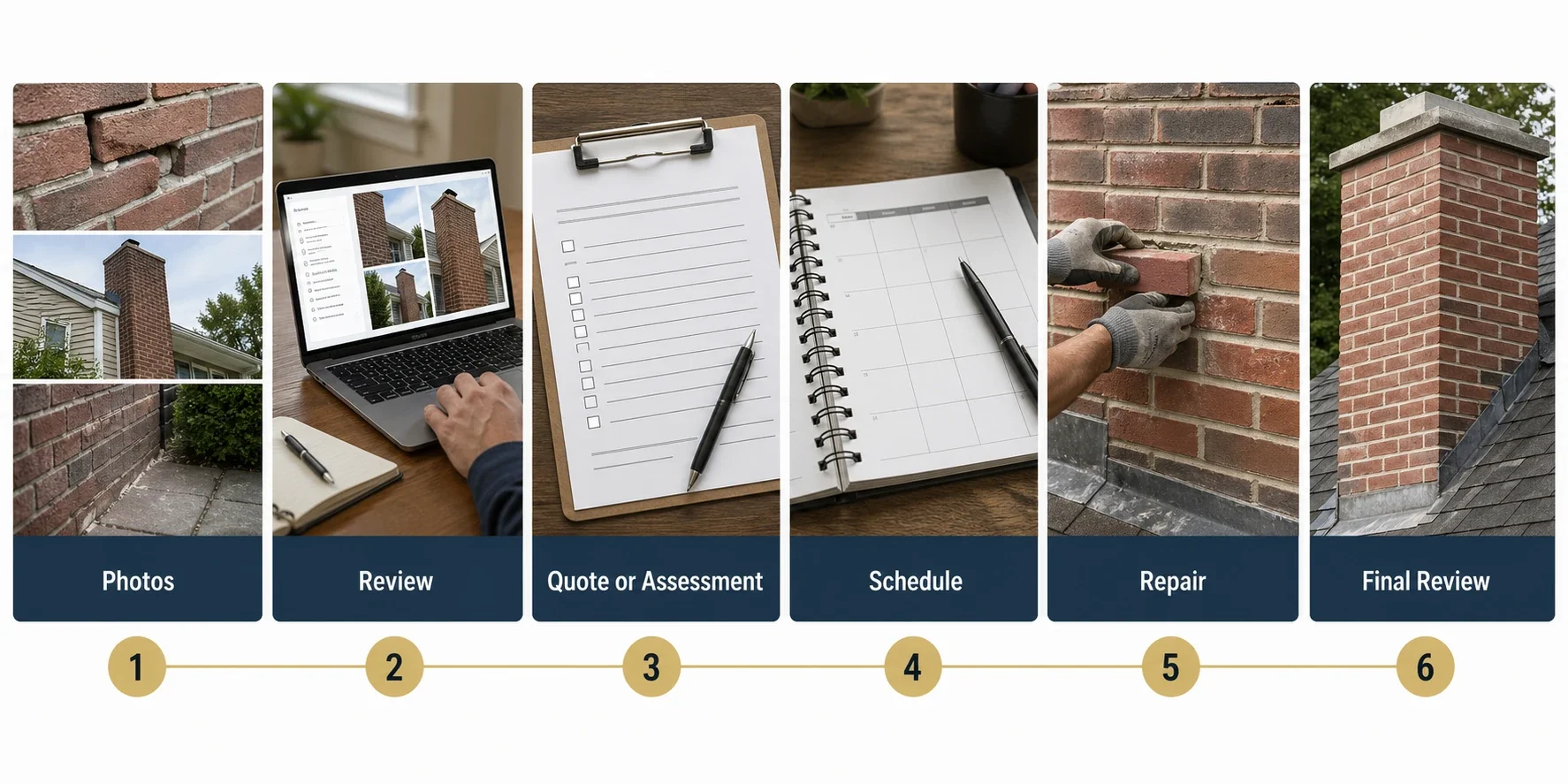
Step 1: Photo Review
Most repair timelines start with photo review. Clear close and wide photos often answer the first question quickly: does the issue look straightforward enough to move toward a quote path, or does it still need a closer look?
If you are mainly wondering whether the first step can happen remotely, read more about quoting from photos.
Step 2: Quote or Assessment
If the visible scope and access are clear enough, the process may move toward a quote path. If important facts are still uncertain, the next step may be a paid onsite contractor evaluation for repair planning and quotation.
If approved repair work moves forward, the pre-tax assessment fee is credited toward that work. If that distinction is the main timing question, read more about assessment versus quote.
Step 3: Scheduling and Weather
Once the repair path is defined, timing still depends on scheduling fit and weather conditions. Masonry work is exposed to site access realities and seasonal conditions, so there are times when the right schedule is determined by more than the calendar alone.
Important boundary: A timeline can be outlined after the scope, access, materials, and weather exposure are understood, but exact dates and emergency-response timing are not guaranteed.
Step 4: Repair Work and Cleanup
The field portion includes setup, access, the actual repair, and cleanup. Some jobs are one continuous visit. Others involve more than one stage because the condition, access, or repair sequence calls for it.
Materials, Access, and Return Visits
Materials, access conditions, and return-visit needs can all affect how the work is sequenced. A small chimney repair high on a steep roof does not move on the same path as an easy lower-wall correction, even if the visible repair area is similar.
If access is the main variable, it also helps to read more about why access affects masonry pricing.
If your repair question is chimney-related, it helps to read why chimney repair costs vary so much. If the next question is really about how the repair will age afterward, the repair lifespan question is covered again below.
What This Means For Your Project
If the issue is clearly visible and straightforward, the process may move quickly from photo review into quote definition.
If access, hidden conditions, weather, or materials complicate the job, the timeline may need a more measured path.
The best first step is usually to send clear photos through intake so the actual repair path can be defined before anyone guesses at timing.
See how TrueNorth maintains project continuity while allowing for real conditions, weather, access, and material timing.
Related Questions
What To Do Next
You do not need to map the full repair timeline on your own before reaching out. A few clear photos and a short description are usually enough to identify the right first step and what is likely to affect the schedule after that.