

Why Access Affects Masonry Pricing
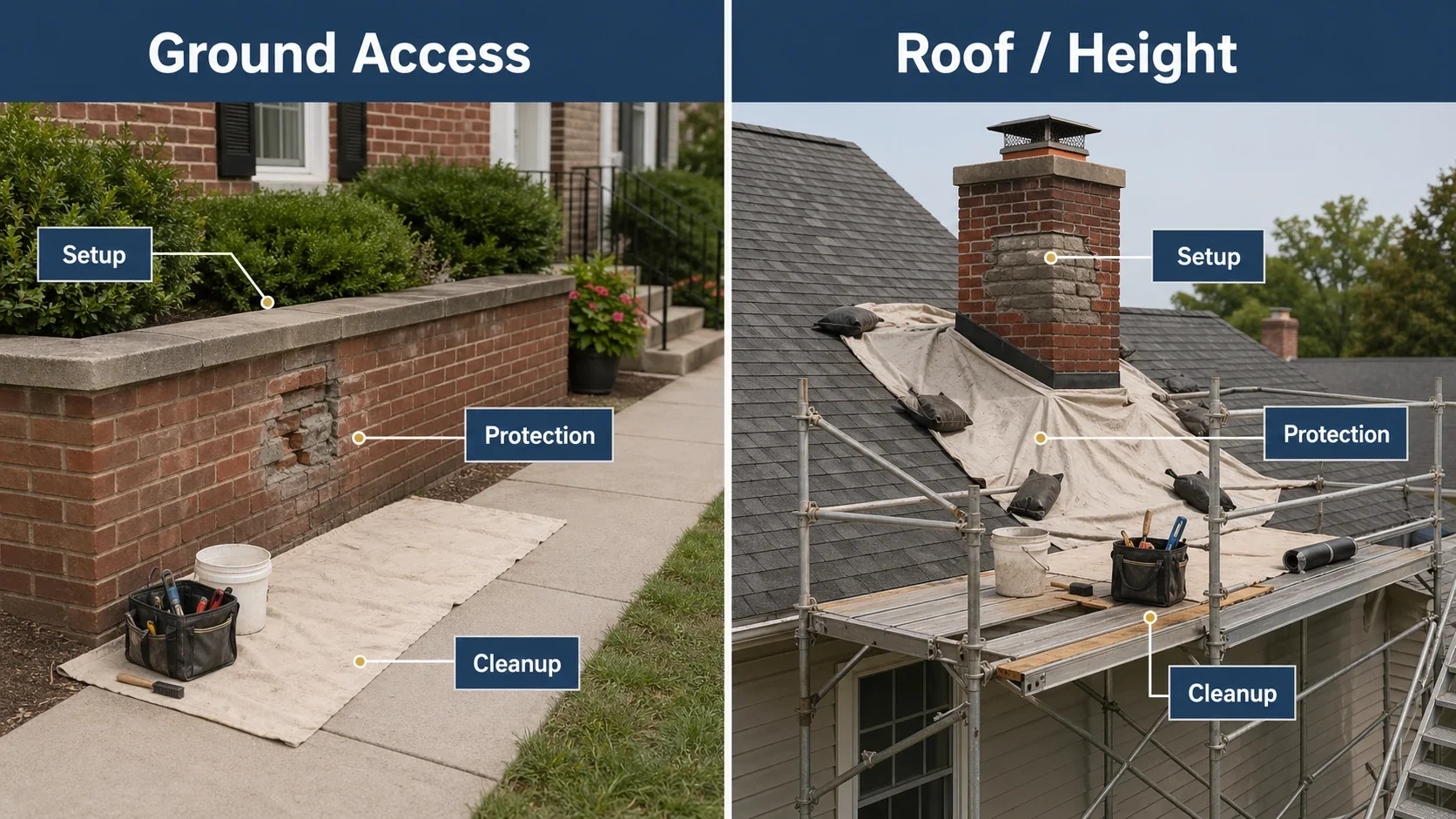
Masonry pricing is not based only on the visible repair area. Height, roof access, staging, carrying distance, protection, and setup can all materially change the real job burden before the repair even starts.
This is why two jobs that look similar in size can still land in very different quote paths once the working conditions are known.
Why This Question Matters
Homeowners often judge masonry work by the damaged area they can see. That is understandable, but the visible repair is only part of the quote. The real burden also includes how the crew reaches it, protects the area, carries material, sets up, and cleans up afterward.
That is especially true on chimneys, upper walls, tight side yards, awkward grades, and any job where safe access changes the way the work has to be done.
The Visible Repair Is Not the Whole Job
A small damaged spot can still involve real logistics. The crew may need ladders, staging, roof protection, material handling, limited working room, debris management, and a safe way to reach the repair area repeatedly.
If those conditions are part of the job, they belong in the pricing discussion even when the visible correction itself looks limited.
See how project realities are carried into the estimate and project record without reducing the work to visible size alone.
Height, Roofs, and Chimneys
Height changes everything. Roof pitch, chimney location, upper-wall access, and working position can all increase the setup and safety burden before the first brick or joint is even touched.
If that is the type of project you are comparing, read why chimney repair costs vary so much. Chimney pricing is one of the clearest examples of how access can outweigh visible square footage.
Staging, Carrying, Protection, and Cleanup
Access is not just about being high up. It can also mean long carries from parking, narrow gates, landscaping protection, dust control, debris handling, or staging material in a way that keeps the property and crew safe.
Those pieces do not show up in one close-up photo of the damage, but they still shape what the real job takes.
Why Small Jobs Can Still Carry Setup Burden
This is one reason small repairs can still surprise people on price. Even if the actual correction is limited, the same access and setup burden may still apply.
If that is the exact question you are wrestling with, see why small masonry repairs can still cost more than expected.
What To Send in Photos
Close-up damage photos help, but wide photos matter just as much. Send shots that show height, roof conditions, grade, gates, nearby obstructions, and the general working area.
If access still cannot be confirmed responsibly from photos alone, the next step may be an onsite contractor evaluation for repair planning and quotation. If approved repair work proceeds, the pre-tax assessment fee is credited toward that work.
If that is the decision you need clarified first, read more about assessment versus quote.
What This Means For Your Project
If the work area is straightforward and easy to reach, the job may stay on a lighter quote path.
If height, roof conditions, carrying burden, or protection needs are significant, the real job may be heavier than the repair size alone suggests.
The best first step is usually to send clear close and wide photos through intake so the visible repair and the access conditions can be reviewed together.
Related Questions
What To Do Next
You do not need to figure out the access burden on your own before reaching out. A few clear photos and a short description are usually enough to show whether the visible repair and the working conditions line up as a straightforward job or a more involved one.