

Why Chimney Repair Costs Vary So Much
Because no two chimneys carry the same repair burden. Height, roof access, failed caps, visible spalling, rebuild depth, and hidden internal conditions can all change the real scope quickly.
This is one of the most common pricing frustrations with masonry work. From the ground, two chimneys can look similar. Up close, they may be completely different jobs.
Why This Question Matters
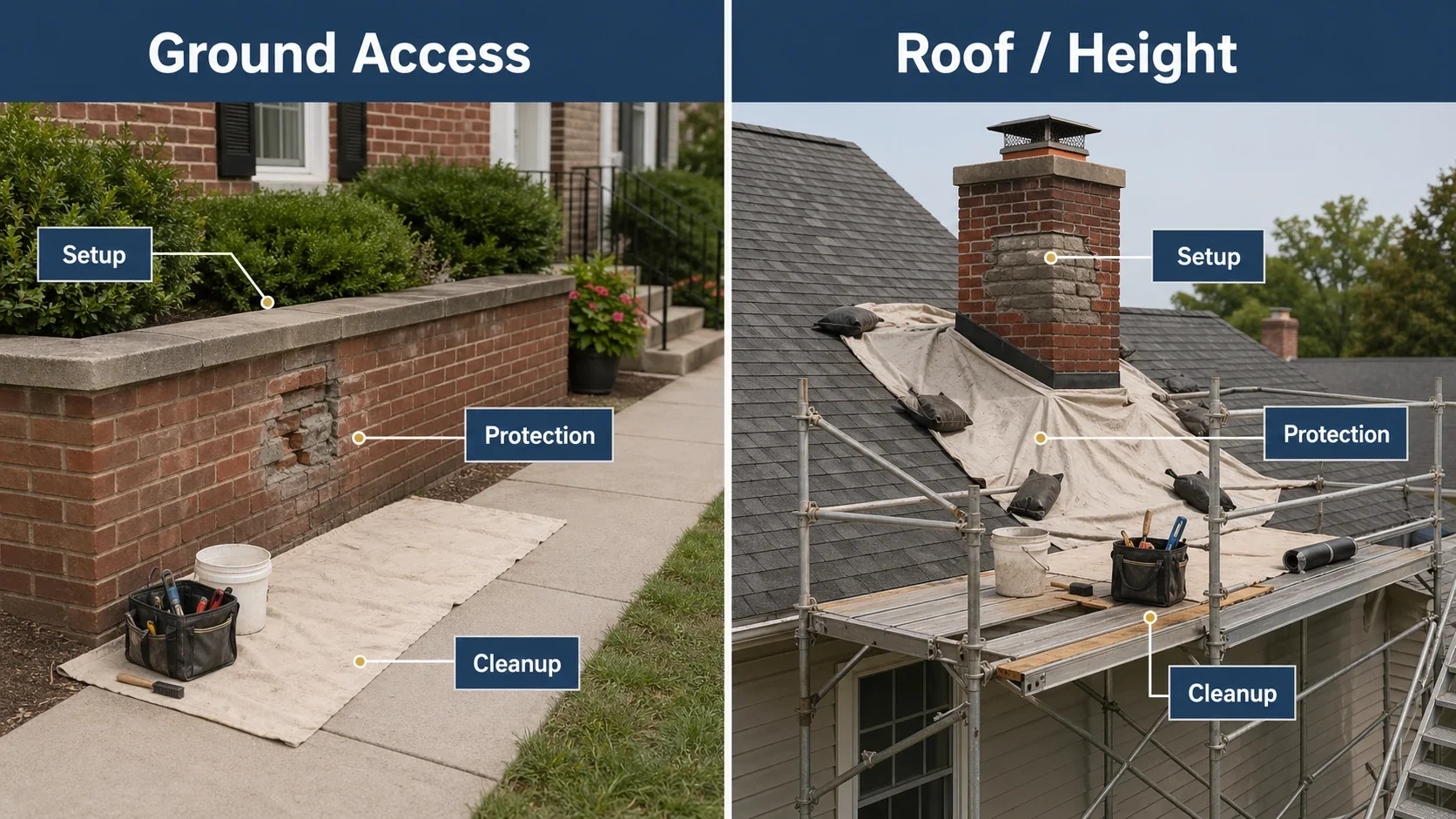
Many homeowners expect chimney pricing to be based mostly on the visible brickwork. In reality, chimney scope is often driven by access, top-of-stack failure, cap condition, dismantling burden, safety setup, debris handling, and whether the shell damage goes deeper than the outer face.
In many cases, the setup required to access the chimney safely is a major part of the job.
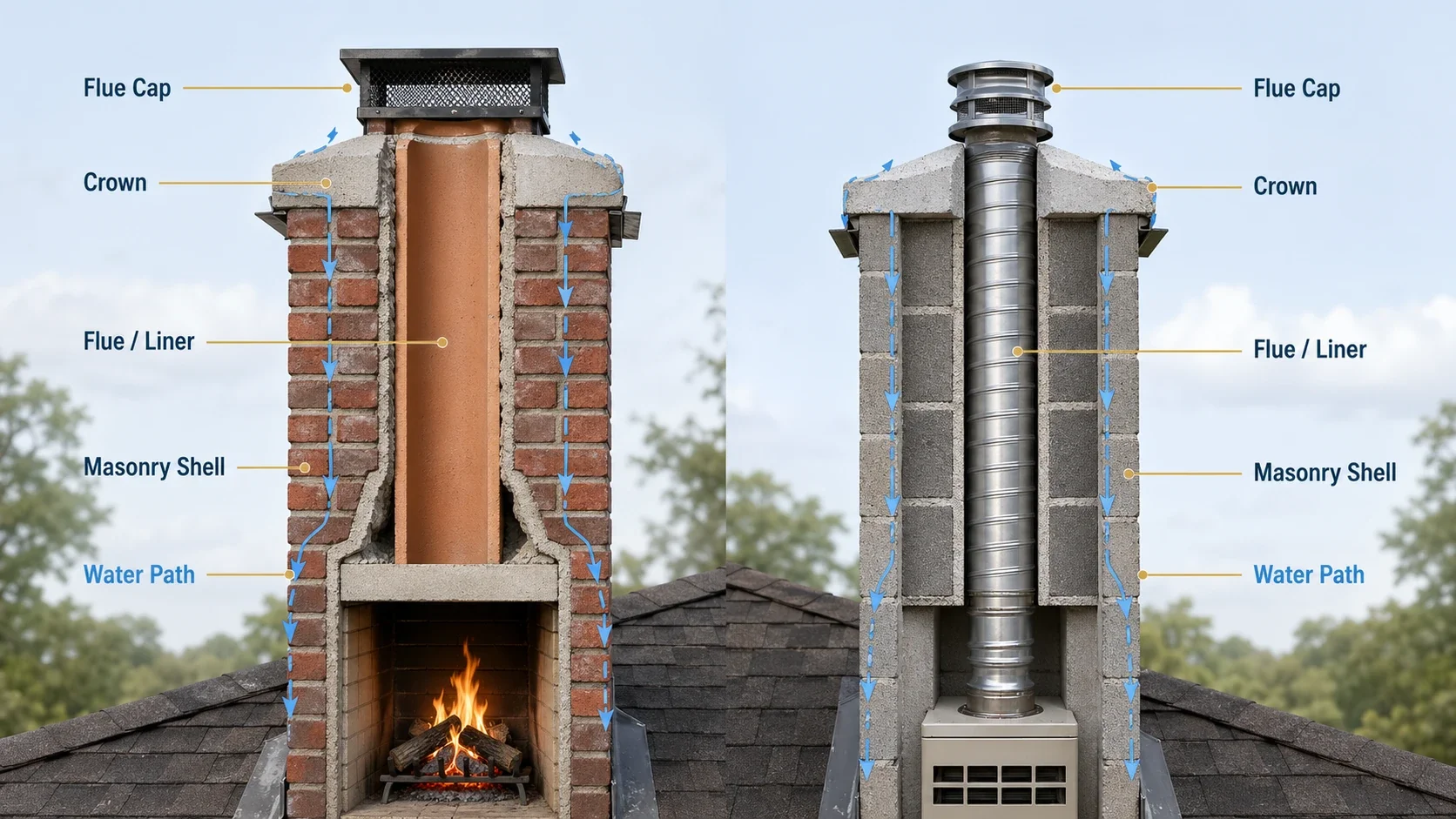
A chimney is not just a stack of exposed masonry. It is a layered repair problem that can include cap failure, loose brick, unstable top courses, water entry, and internal conditions that are not visible from the ground.
For a step-by-step visual explanation, see chimney failure patterns in the Masonry Repair Visual Guide.
Important boundary: Photo review often starts the process, but some chimney jobs still need a paid onsite assessment before a responsible scope can be confirmed. Only the final written quote/agreement is binding.
What This Means For Your Project
If your chimney issue is limited to a small, clearly visible top section with straightforward access, a smaller repair path may be possible.
If the roof is steep, the chimney is high, the cap is badly failing, or the visible deterioration suggests deeper instability, the repair may shift toward partial rebuild or more involved correction.
If the condition cannot be confirmed responsibly from photos alone, the next step may be a paid onsite contractor evaluation. That is for repair planning and quotation, not structural engineering.
If the question is shifting from outer chimney masonry to what is happening in the flue path, it also helps to read more about chimney repair versus flue replacement.
If a chimney assessment is needed and the repair moves forward, the pre-tax assessment fee is credited toward approved work.
Common Chimney Cost Drivers
- Steep, high, or metal-roof access
- Failed chimney cap or badly deteriorated crown area
- Spalled brick or loose top courses
- Partial rebuild versus localized patch scope
- Scaffold, staging, and debris-handling burden
- Internal flue or core conditions that change the repair path
What To Do Next
If this is an existing chimney issue, the best next step is to start chimney intake and send clear photos. Wide shots matter just as much as close-ups because roof and access conditions affect the real scope.
If you are trying to decide whether photos might be enough before anyone comes out, read more about quoting masonry from photos.
If part of the frustration is that the repair area looks small, it also helps to see why small masonry repairs can still cost more than expected.
Related Questions
What To Keep In Mind
You do not need to diagnose the chimney yourself before reaching out. A few clear photos and a short description are usually enough to sort out whether the next step looks like intake review, assessment, or a more defined chimney repair path.