
Can Replacement Brick Match Existing Brick?
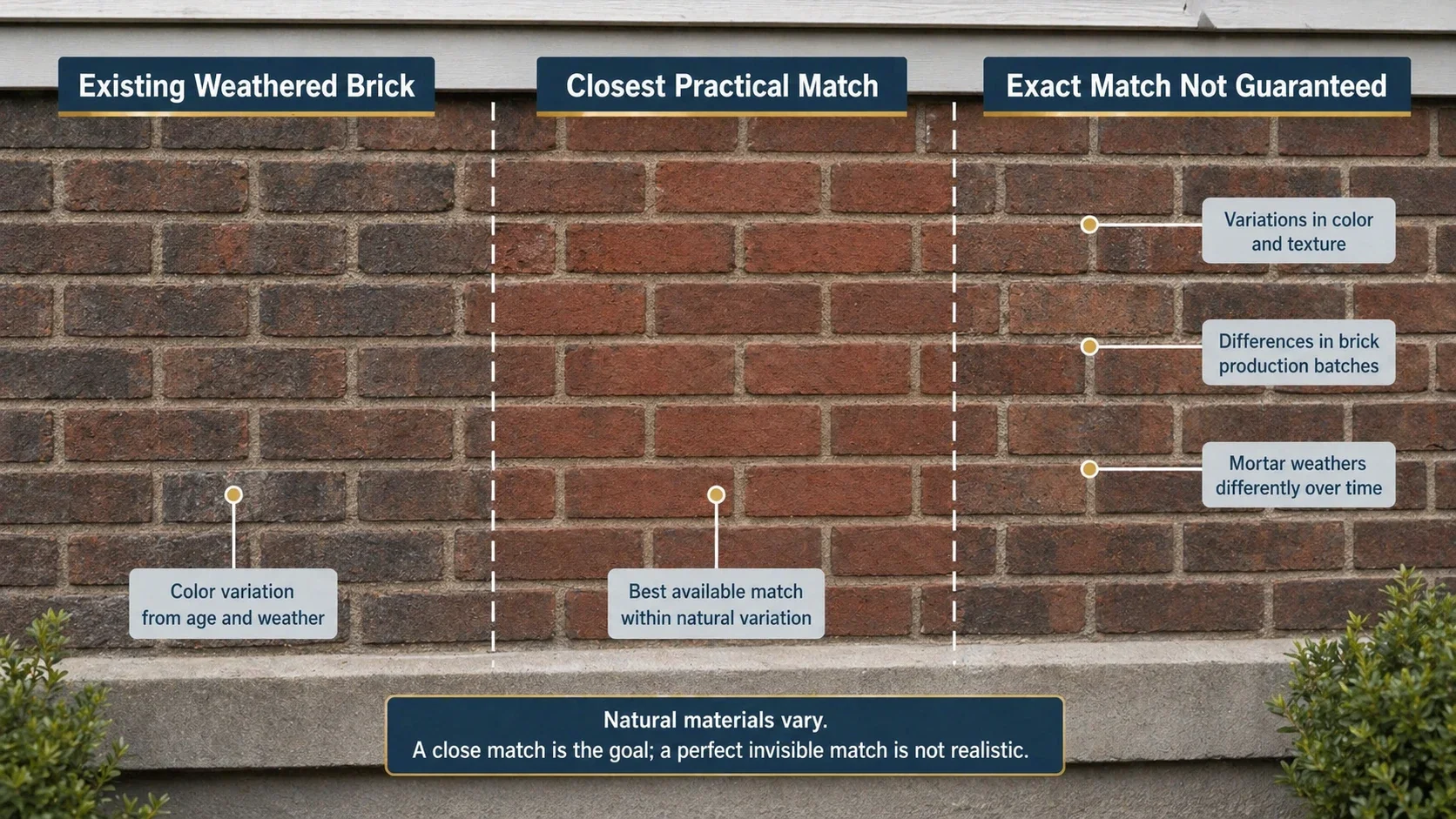
Sometimes it can be matched closely, but exact matching is not guaranteed. The practical goal is the closest realistic blend, not a promise that old and new brick will disappear into each other perfectly.
This matters most on older homes, weathered walls, and localized repairs where new material sits right beside aged masonry.
Why This Question Matters
Homeowners often delay needed repair because they are worried the patch will look obvious. That concern is reasonable. Brick colour, size, texture, firing variation, mortar tone, age, weathering, and staining all affect how a repair reads once it is complete.
Some repairs blend well. Some remain slightly visible because the original wall has decades of aging that new materials do not have yet. A structurally correct repair can still be visually noticeable — and still be the right decision. It means the visual expectation should be honest from the start.
Important boundary: TrueNorth aims for the closest practical match. Exact brick, mortar, colour, texture, or age blending is not guaranteed.
What This Means For Your Project
If the existing brick is still common, the repair area is limited, and the surrounding wall is relatively even in tone, the blend may be fairly close.
If the brick is old, discontinued, heavily weathered, painted in the past, or sitting next to highly aged mortar, the repaired area may still read as newer even when the repair is done properly.
If appearance is your biggest concern, it helps to send clear photos through intake so the repair area and the surrounding wall can be reviewed together, not just the damaged spot by itself.
Common Brick Matching Challenges
- Older or discontinued brick sizes and textures
- Walls with heavy weathering or uneven fading
- Existing mortar that has aged far beyond the new repair mortar
- Localized patches beside a large, older wall face
- Previous repairs using different brick or mortar
- Moisture staining that changes how the original wall reads
What To Do Next
If this is an existing repair issue, the best next step is to start brick repair intake with close-up photos and wider elevation shots. That helps set expectations around repair scope and how the finished area is likely to read beside the surrounding wall.
If the damaged area is small and part of the concern is why a localized repair still carries real cost, read why small masonry repairs can cost more than expected.
If the first question is whether photos are enough to move the job forward, see when masonry can be quoted from photos.
Related Questions
What To Keep In Mind
You do not need to decide on your own whether the appearance risk is acceptable. A few clear photos and a short description are usually enough to review the damaged area, the surrounding wall, and the most realistic next step.