

Why Parging Fails and What to Check Before Repair
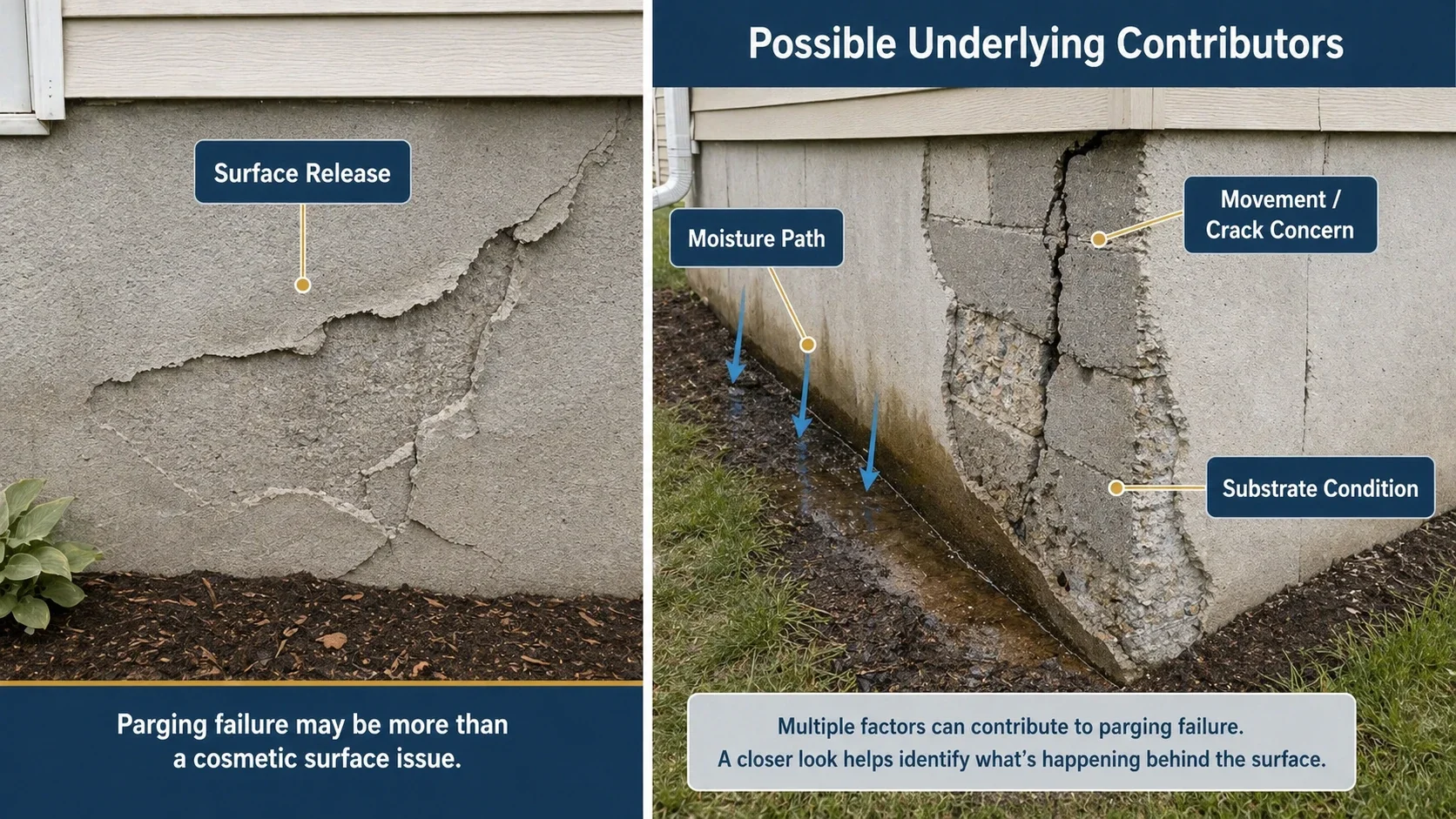
Parging usually fails because the bond behind it has failed. Moisture, poor preparation, movement, unstable backing, and freeze-thaw exposure can all cause cracking, peeling, or sheets of parging to let go.
When parging starts coming off, the surface is often not the whole story. In many cases, the real question is what made the bond fail in the first place.
Why This Question Matters
Parging is often treated like a simple cosmetic coating. Sometimes it is partly aesthetic. But if the surface underneath is wet, unstable, dirty, moving, or already failing, new parging can let go again for the same reason the old layer failed.
When parging fails, the question is rarely just how to reapply it — it is why it did not hold in the first place.
This is why re-parging is not always just a quick surface refresh. The real issue may involve moisture path, freeze-thaw exposure, substrate condition, or a wall surface that was never a good bond base in the first place.
For a visual version of those layers, see parging failure patterns in the Masonry Repair Visual Guide.
Important boundary: Parging is not a full waterproofing or drainage system by itself. If there is active water entry, the cause still has to be identified instead of covering over it.
What This Means For Your Project
If the surface is sound and the failure is limited, a straightforward repair path may be possible.
If the parging is coming off in sheets, the wall is visibly wet, or there are cracks and unstable areas behind the surface, that usually points to a deeper problem than the finish coat alone.
If you are not sure whether the issue is mostly cosmetic or something broader, send photos for review. In many cases, photo review is enough to tell whether the job looks straightforward or whether it needs a closer look.
Common Signs the Surface May Not Be the Whole Issue
- Parging releasing in large sheets instead of small chips
- Cracks returning quickly after earlier repair
- Dark staining, dampness, or obvious moisture exposure
- Loose or hollow-sounding areas behind the surface
- Movement, shifting, or unstable substrate beneath the finish coat
- Evidence that the previous surface was applied over poor preparation
What To Do Next
If this is an existing issue, the best next step is to start foundation or parging intake with close and wide photos. That helps separate surface failure from broader masonry or moisture-related trouble.
If you are wondering whether pictures may be enough before anyone comes out, see when masonry can be quoted from photos.
If the hesitation is partly because the area looks small, it may also help to read why small masonry repairs can still cost more than expected.
Related Questions
What To Keep In Mind
You do not need to know yet whether the parging is mainly cosmetic or a sign of a broader masonry issue. A few clear photos and a short description are usually enough to point the job in the right direction.