

Can Stone Veneer Be Installed Over Existing Brick?
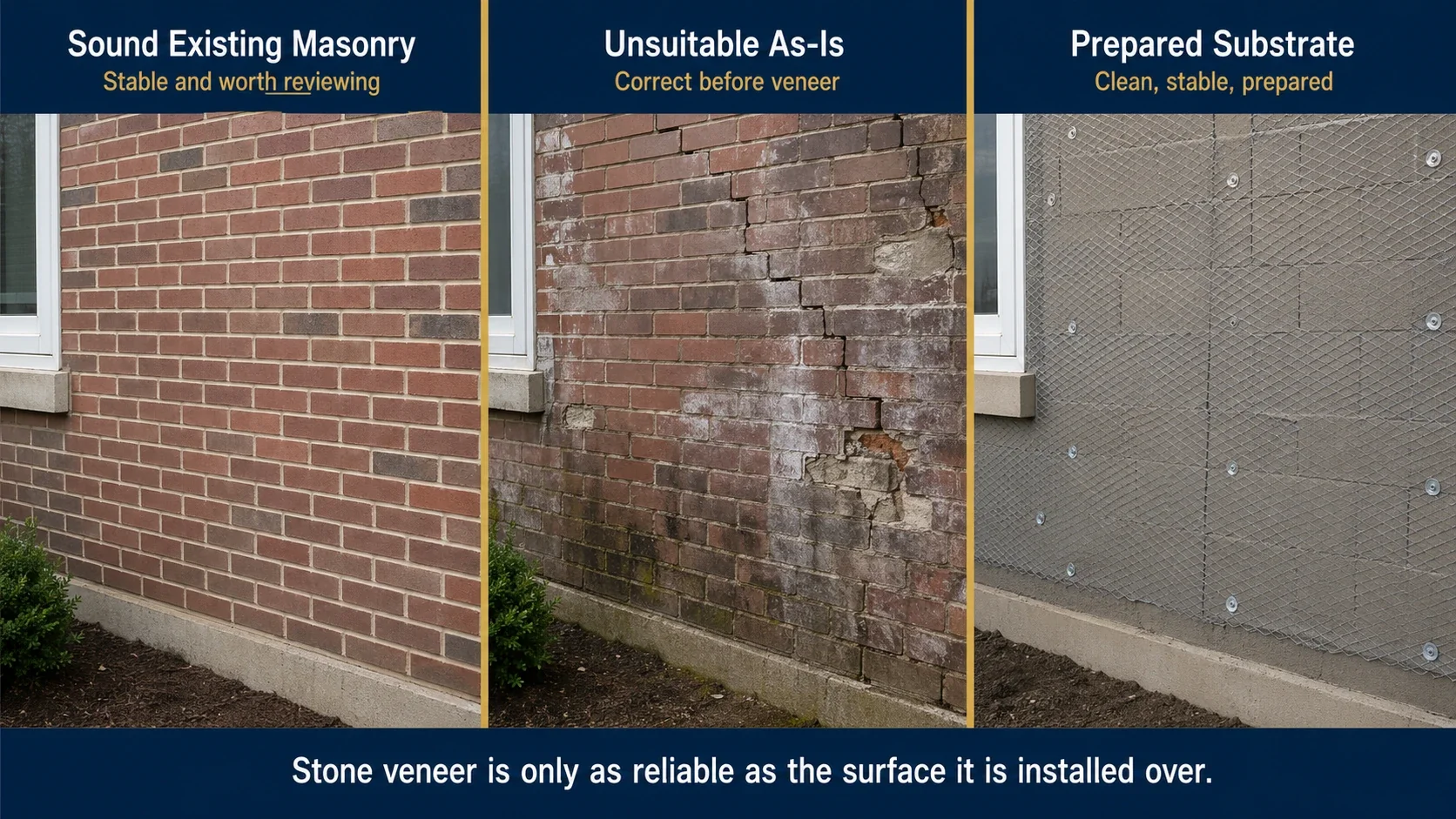
Sometimes, but the existing brick has to be sound and worth building on. The real question is not just whether there is brick underneath. It is whether that brick is stable, compatible, and properly prepared for the veneer system being considered.
For Orangeville-area and nearby project planning, this is one of the most common renovation questions because covering an existing wall can look simpler than rebuilding it. Sometimes it is. Sometimes it is not.
Why This Question Matters
Stone veneer is only as reliable as the surface it is being installed over. If the existing brick is loose, wet, coated, heavily deteriorated, or poorly suited for the new system, building over it can create problems later instead of solving them.
That is why this is not a simple yes-or-no question. Veneer projects depend on substrate stability, moisture conditions, detailing, preparation, and whether the wall you are building on is actually worth keeping in the system.
If it helps to see the build-over decision visually, see veneer-over-brick system examples in the Masonry Repair Visual Guide.
Important boundary: TrueNorth handles masonry work and veneer installation where the project and substrate are appropriate. Engineering, structural design, and unrelated non-masonry trade work are outside normal scope unless specifically stated in writing.
What This Means For Your Project
If the existing brick is sound, stable, and suitable for the selected veneer system, installing over it may be possible.
If the brick is loose, wet, painted, cracked, or already showing broader failure, prep work, correction, or a different build path may make more sense than trying to cover over the condition.
If this is a repair problem disguised as a renovation idea, intake comes before consultation.
If this is a new veneer or installation project, the best path is usually to request a project consultation. If what you actually have is a current masonry failure that needs repair first, start with intake and photos.
Common Conditions That Need Attention First
- Loose or unstable existing brick
- Moisture exposure, staining, or active deterioration
- Painted, coated, or contaminated surfaces
- Previous repair layers that do not provide a reliable base
- Cracks, movement, or signs the wall assembly is already failing
- Unclear detailing around openings, transitions, or terminations
What To Do Next
If this is a planned veneer upgrade, request project consultation with a few wide photos of the wall and the project area. That makes it easier to discuss whether the existing surface looks usable or whether the project needs a different preparation path.
If the reason for the question is that the existing brick already looks questionable, it may also help to read why surface masonry failures often point to deeper issues.
If you are mainly trying to understand whether photos are enough to sort out the next step before a visit, read more about quoting masonry from photos.
Related Questions
What To Keep In Mind
You do not need to know yet whether the existing brick can stay in the system. A few clear photos and a short description are usually enough to point the project toward the right consultation or repair path.