

Chimney Repair vs Flue Replacement: What's the Difference?
Chimney masonry repair and flue replacement are not the same thing. One deals with the condition of the chimney structure, and the other deals with the flue path inside it. Sometimes they overlap. Sometimes they do not.
This question matters because a chimney can look like a brick problem from the outside while the real decision also depends on what is happening inside the flue path.
Why This Question Matters
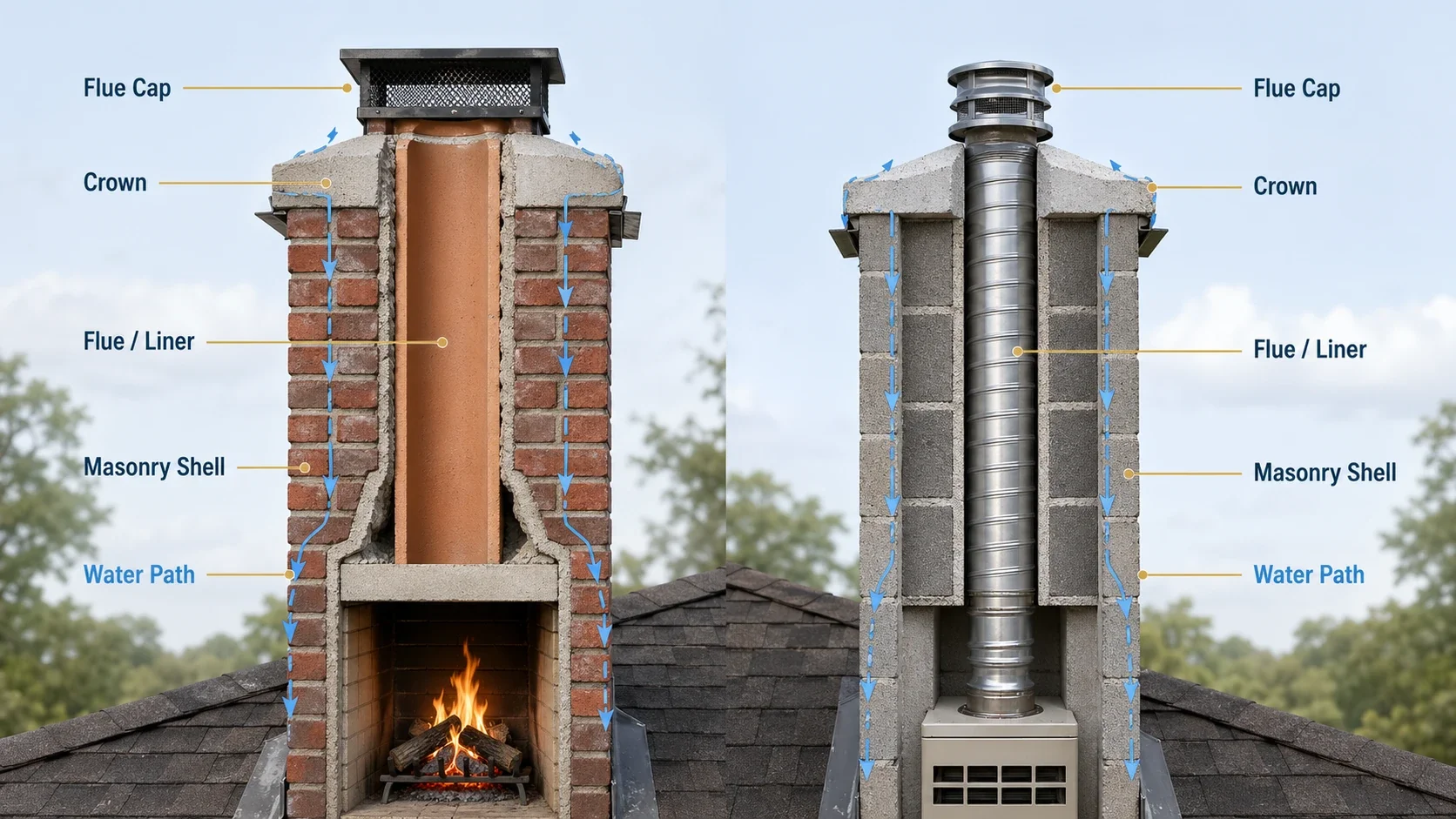
Homeowners often use "chimney repair" to describe everything at once, but the masonry shell, cap, top courses, crown area, flue tiles, and any liner-related decisions are not one single issue. The visible repair path can change if flue condition points to a bigger chimney decision.
That does not mean every chimney problem needs flue replacement. It means a responsible repair decision has to separate the outer masonry condition from the internal flue path wherever possible.
Masonry Chimney Repair vs Flue Work
Masonry chimney repair usually means work on the brick, mortar joints, cap area, crown area, rebuild sections, and the exterior structure that is actually failing. Flue replacement or flue-tile-related work is a different question tied to the venting path inside the chimney.
TrueNorth's role here is masonry-contractor planning guidance. Questions about flue use, liner suitability, venting safety, or certification may need confirmation from the appropriate trade or professional where applicable.
Important boundary: This page helps separate masonry repair scope from flue-path questions. It does not turn masonry guidance into HVAC, liner-certification, or engineering sign-off.
When Flue Issues Change the Repair Path
Flue condition can change the repair path when cracked flue tiles, damaged liners, internal deterioration, or use-and-safety questions mean the visible masonry work is not the only issue that matters. In those cases, the outer repair scope may still be clear, but the full decision is broader than brick replacement alone.
That is one reason chimney projects can move away from a simple surface-repair conversation. If the inside condition matters to the decision, the project may need coordinated confirmation before the final path is clear.
When Masonry Condition Drives the Scope
In other cases, the outer chimney condition is the main issue. Loose brick, failed top courses, bad cap deterioration, visible spalling, water entry, or wider shell failure can drive the repair scope even before any deeper flue questions are resolved.
If that is the main concern, it helps to read why chimney repair costs vary so much and see when repair versus rebuild starts to make more sense.
Why Photos May Not Show Everything
Photos are still the best first step for many chimney issues, but they do not always show the internal condition, upper access reality, or the full extent of what has failed. A chimney can look limited from the ground and still turn out to involve a broader planning question.
If the important facts are still uncertain after photo review, the next step may be a paid onsite contractor evaluation for repair planning and quotation. If approved repair work proceeds, the pre-tax assessment fee is credited toward that work.
If you are mainly sorting out whether the job looks quote-ready or assessment-first, read more about assessment versus quote.
What This Means For Your Project
If the visible masonry failure is the main issue, the project may stay on a masonry repair or rebuild path.
If flue condition or liner questions materially affect the decision, the chimney may need a broader review than outer brickwork alone can provide.
If you are not sure which category your chimney falls into, start with clear photos and a short description through intake.
Related Questions
What To Do Next
You do not need to sort out masonry condition versus flue condition on your own before reaching out. A few clear photos and a short description are usually enough to point the chimney toward the right next step.