

Can You Just Patch It? When Small Masonry Repairs Make Sense
Sometimes a patch is the right repair. Sometimes it only covers the symptom. The difference depends on surrounding condition, cause, access, and whether the repair is likely to hold.
This is a reasonable question. Most homeowners are not trying to under-repair a problem. They are trying to avoid doing more work than the condition actually calls for.
Why This Question Matters
Homeowners usually ask this because they want to avoid over-repair. That is a fair concern. The real issue is whether the patch solves the actual problem or only hides the visible damage for a while.
If the cause is not understood first, patching can turn into poor value. The repair may look smaller on paper than it really is, or the visible failure may only be one part of what is going on.
Important boundary: Visible-condition quoting only applies to what can actually be confirmed at quote time. Hidden conditions may still change scope and pricing later if more is uncovered.
When a Patch Can Make Sense
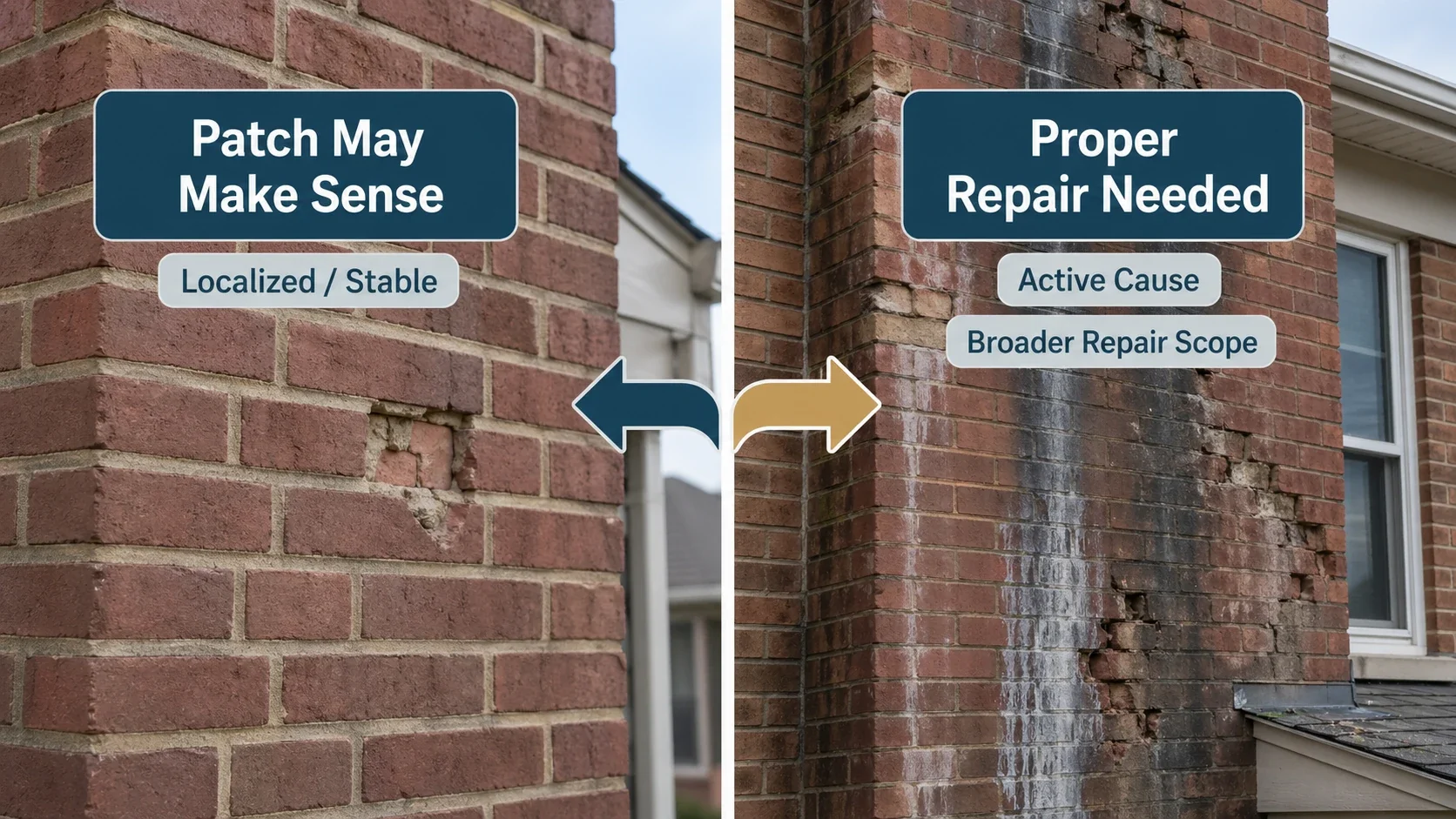
A patch may be reasonable when the damage is clearly localized, the surrounding masonry is still stable, the source of deterioration is not still active, access is straightforward, and the repair area can be defined clearly.
It also helps when expectations are realistic. A small repair can make sense when it is targeting a limited condition that is actually likely to hold once corrected.
When Patching Is Usually Poor Value
Patching is usually poor value when the surrounding masonry is also failing, water entry is still active, movement is visible, cap, flashing, or substrate issues remain unresolved, or the visible damage is only part of a broader problem.
It is also poor value when the same setup and access burden would likely have to be repeated again later to address the areas left behind.
If it helps to compare localized repair with broader failure patterns, see this visually in the Masonry Repair Visual Guide.
If the visible problem is flaking faces or pieces breaking away, it also helps to read more about brick spalling repair before assuming a patch is the right path.
If that burden is part of the hesitation, it helps to read why small masonry repairs can still cost more than expected.
Why “Small Repair” Does Not Always Mean “Simple Repair”
Setup, access, protection, tool use, cleanup, and matching can dominate small repairs. A tiny visible area can still require real masonry work before the actual correction even starts.
That is why patching is not automatically cheaper if the same burden has to be repeated later. In some cases, the visible patch is the easy part and the real job is everything around it.
For that reason, it also helps to see why small masonry repairs can still cost more than expected.
Chimney Example
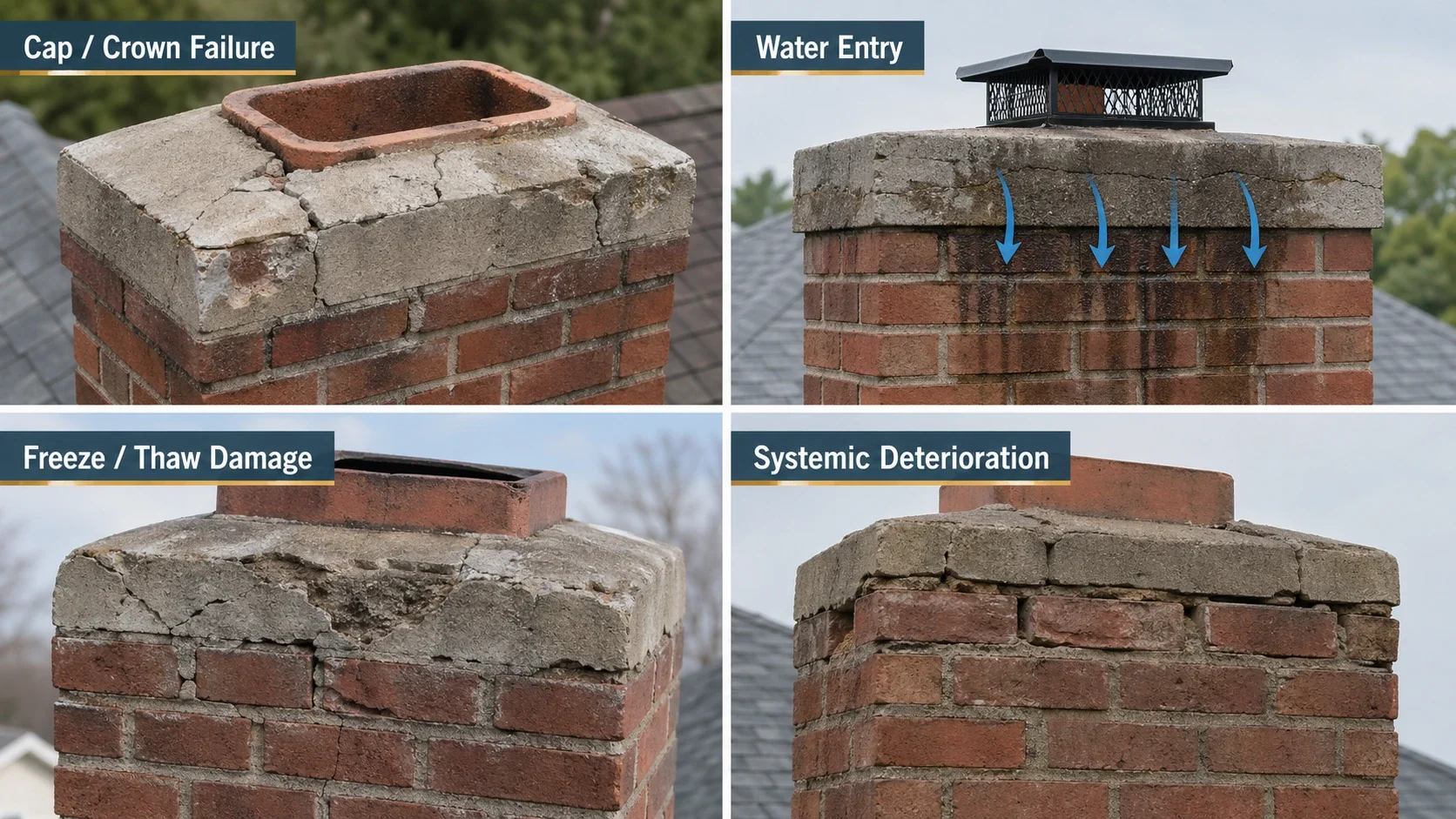
Chimney tops are a common example. A cap-only correction or a small patch may make sense when the rest of the chimney is still stable.
If the top courses, cap, and surrounding brick are all failing together, patching may be poor value because the visible broken area is not the whole repair problem.
If that is the decision you are trying to sort out, read more about chimney repair versus rebuild.
If the Condition Is Unclear
Photos may be enough to sort out the next step. If the damage, surrounding condition, and access are clear enough, photo review can often tell you whether a localized repair looks realistic.
If hidden conditions or broader failure are still unclear, an onsite assessment may be the better path. That is a contractor evaluation for repair planning and quotation, not an engineering report.
If approved repair work proceeds, the pre-tax assessment fee is credited toward that work. If that is the question you need answered first, read more about assessment versus quote.
What This Means For Your Project
If it is localized and stable, a patch may make sense.
If the cause is still active, patching may not hold.
If the scope is unclear, start with photos.
Related Questions
What To Do Next
You do not need to decide on your own whether the issue is truly patchable. A few clear photos and a short description are usually enough to point the job toward the right next step.