


Masonry Repair Intake
Use this page if you already have a masonry issue and want it reviewed. Repair issues belong here; new stone, brick, veneer, or planned project work should start on the consultation page.
Repair Intake Form
Use the form below to send your details. Include photos where the form allows. If photos cannot be uploaded directly, include a note and they can be sent by email after the first contact.
Who This Page Is For
This intake path is for existing masonry problems, including damaged or spalling brick, chimney damage, failing parging or foundation surfaces, loose stone or veneer, localized masonry repairs, and issues that are visible but not yet fully understood.
If the first question is location rather than scope, see whether TrueNorth services your area.
Best for:
- chimney damage
- brick repair
- parging or foundation surface issues
- stone or veneer repair
- mortar or tuckpointing concerns
- sills, openings, flagstone, or localized masonry repair
If you're planning new stone, brick, or veneer work, use the consultation page instead.
If you are planning new masonry, stone, or veneer work rather than dealing with an existing issue, use the project consultation path instead.
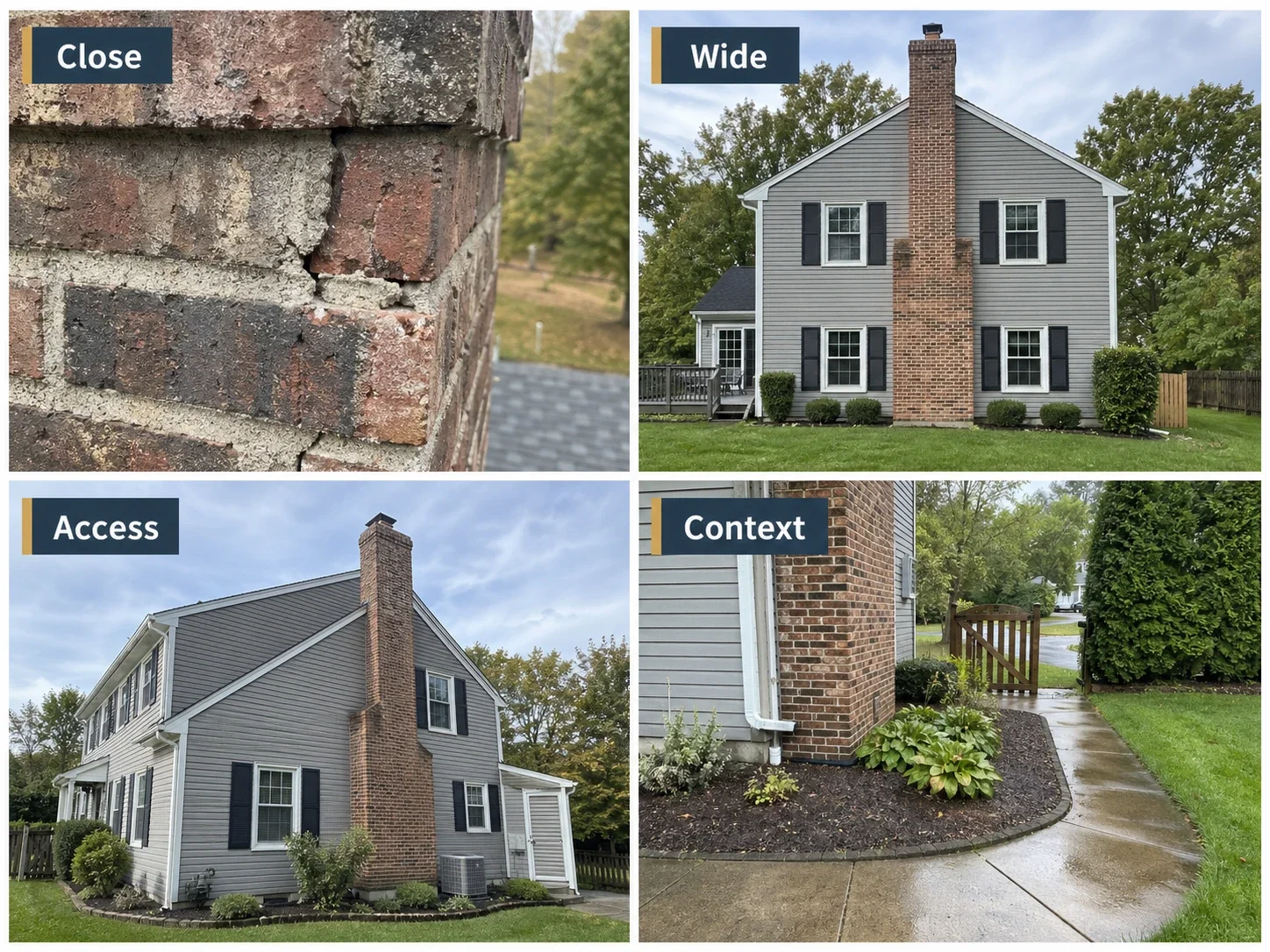
What To Send
Photos
- close-up photo of the damage
- wider photo showing the surrounding masonry
- access, height, or roof context if relevant
- photo of the full wall, chimney, or work area when possible
- any water staining, cracking, loose material, or previous repair areas
Details
- property town or location
- short description of what changed or what you noticed
- how long it has been happening, if known
- whether anything is loose, leaking, falling, or actively worsening
- preferred timing, if there is one
What Happens After You Submit
1. Photo Review
The visible condition and access are reviewed first.
2. Quote Path if Clear
If scope and access are clear, a quote-from-photos path may be possible.
3. Assessment if Needed
If hidden conditions, access, movement, or moisture concerns remain unclear, an onsite assessment may be recommended.
The assessment fee is credited toward the work if the project moves forward.
4. Final Written Quote/Agreement
Only the final written quote/agreement is binding.
If you want the step-by-step view after intake, see how the masonry repair timeline usually unfolds.
When Photos May Not Be Enough
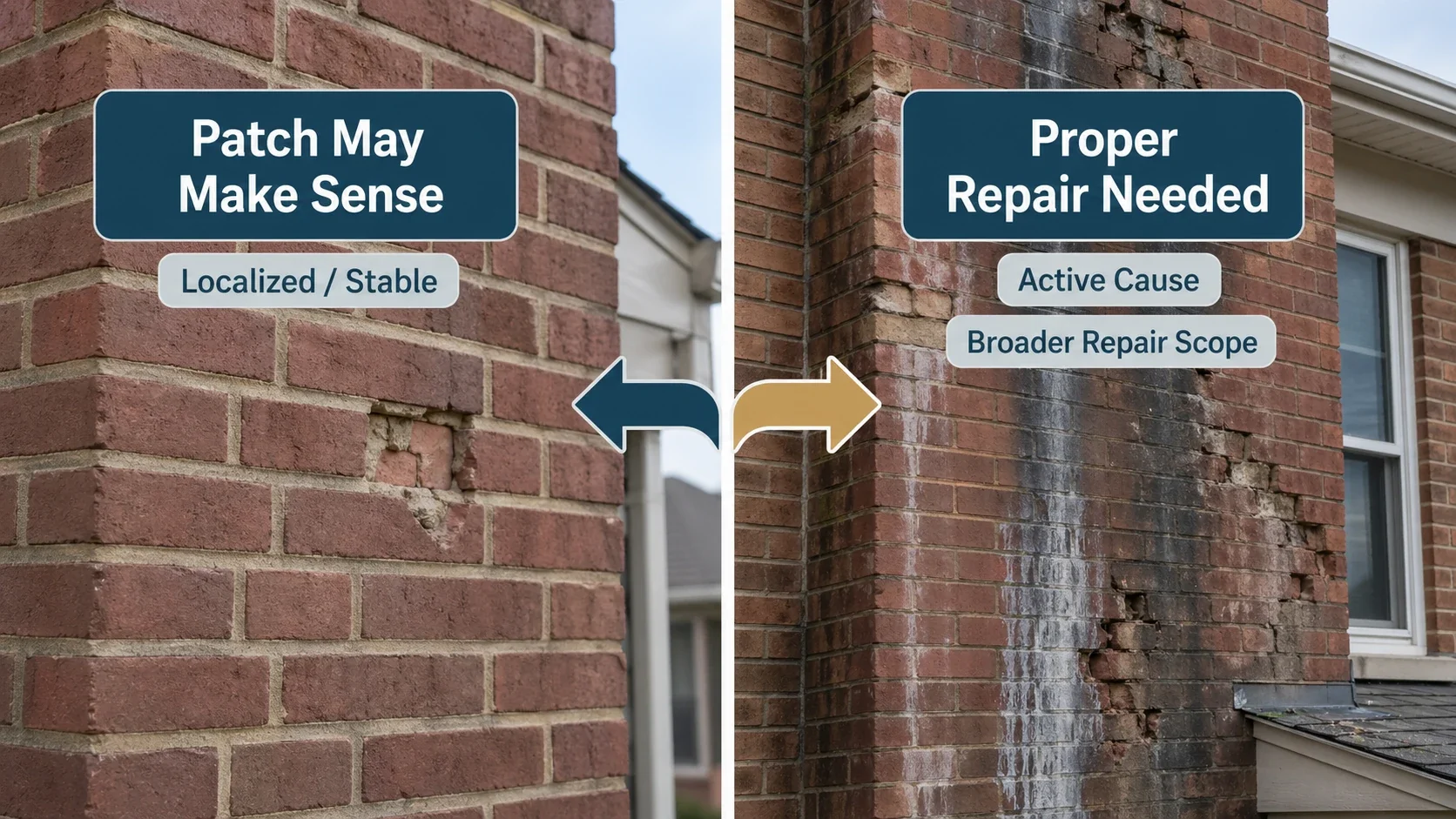
Photos are often the right starting point, but not every repair can be defined responsibly from photos alone. Chimney internals, steep or complex access, foundation and moisture concerns, movement or cracking, hidden backing or substrate issues, and unclear repair boundaries can all change the next step.
Before You Submit
Photos are a starting point for contractor review, not a final diagnosis. Hidden conditions, access, moisture, movement, or surrounding deterioration can still change the repair scope.
The final written quote or agreement is the binding scope and price. If the goal is only the cheapest possible patch regardless of condition, this process may not be the right fit.
Not Sure Yet?
If you are not sure whether this should be quoted from photos, assessed onsite, patched, or rebuilt, start with the FAQ or the related guides below.
Final Step
Start with the repair intake form if you are dealing with an existing issue. Use consultation for new stone, brick, veneer, or planned masonry project work. If you are unsure, start with the FAQ or use the general contact page.