

Brick Spalling Repair: Why Brick Faces Flake and Break
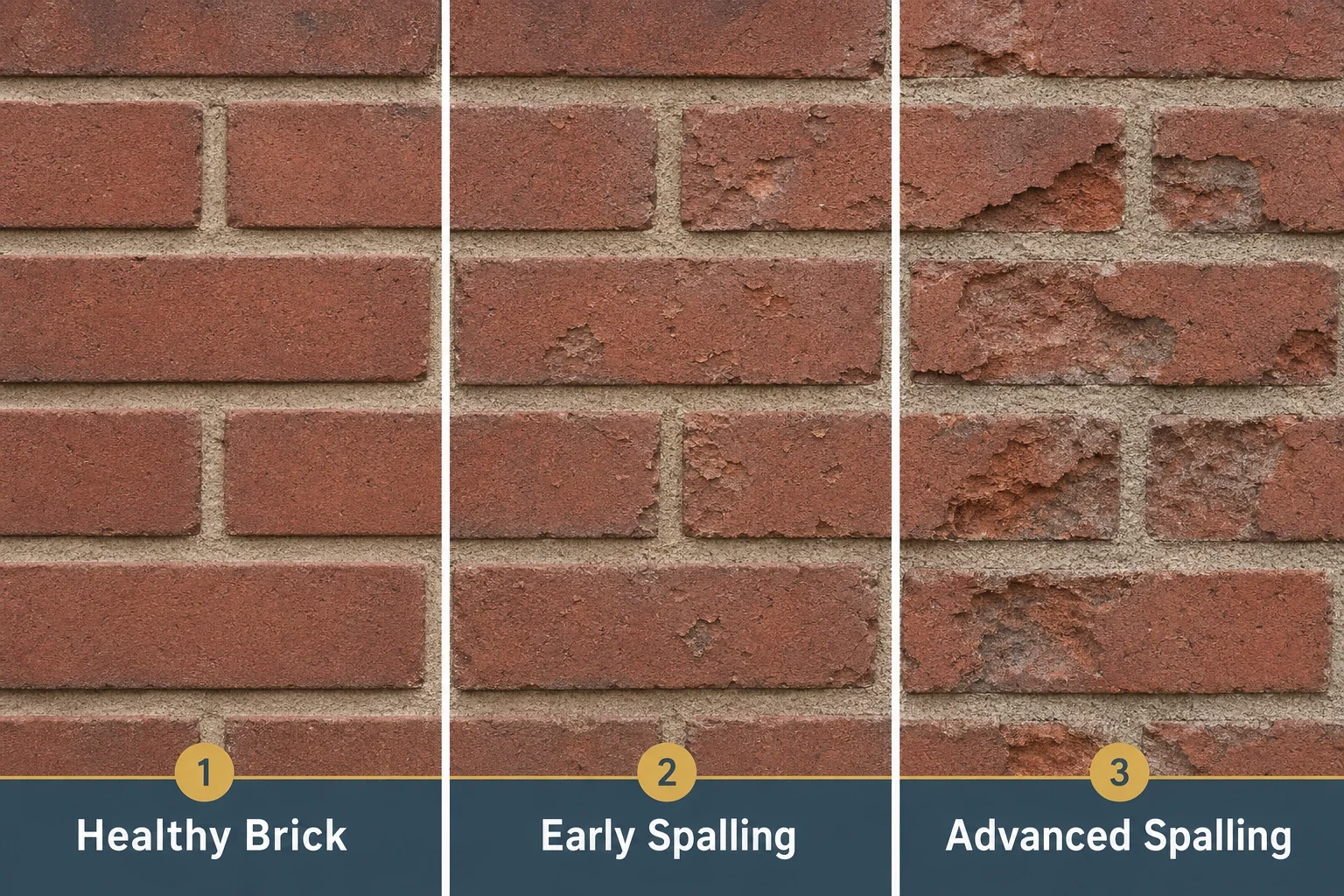
Spalling brick usually means the face of the brick is breaking down. Moisture, freeze-thaw exposure, trapped water, age, and repeated saturation can all push a brick from stained to flaking to breaking apart.
The main question is not just how the face looks today. It is whether the damage is still limited or whether the brick has moved into replacement territory.
Why This Question Matters
Spalling often starts as a small visual problem and then spreads. Once the face is breaking off, the brick is no longer just stained or aged. It is losing material and becoming less reliable as part of the wall or chimney.
That does not mean every spalled brick section needs a large rebuild. It does mean the repair decision should be based on the real condition, not just the size of the first broken face.
What Spalling Brick Usually Means
Spalling usually means the brick has been taking on too much moisture or has already weathered past its sound outer surface. Sometimes the damage is still localized. Sometimes it suggests the surrounding area has been under the same stress for a while.
Practical point: Once the face starts breaking off, the real repair question is whether the brick is still worth keeping in place or whether replacement is the more honest path.
Common Causes of Spalling
Moisture is usually part of the story. Freeze-thaw cycling, trapped water, failed caps, poor shedding details, old soft brick, or repeated saturation can all contribute. Sometimes nearby mortar or adjacent details are also part of why the brick kept getting wet.
If the damage is high up or tied to a chimney, surrounding conditions can matter just as much as the individual broken brick faces.
For a visual explanation of brick and water-management patterns, see the Masonry Repair Visual Guide.
When Brick Replacement Makes Sense
Brick replacement makes more sense when the face loss is real, the damaged units are no longer sound, or the failure has moved beyond a cosmetic surface issue. If the brick is actually degrading, replacing the affected units is usually a better path than trying to preserve what is already breaking apart.
If appearance is part of the concern, it helps to read what to expect with brick matching before assuming the repair will either disappear completely or look unacceptably obvious.
When Patching Is Usually Poor Value
Patching is usually poor value when the brick face is already letting go, the surrounding area is also failing, or the moisture cause is still active. Covering over a brick that is physically breaking down does not usually solve the real issue.
If the decision keeps coming back to whether the smallest possible correction is still worth doing, read more about when a patch makes sense and when it does not.
What About Matching the Brick?
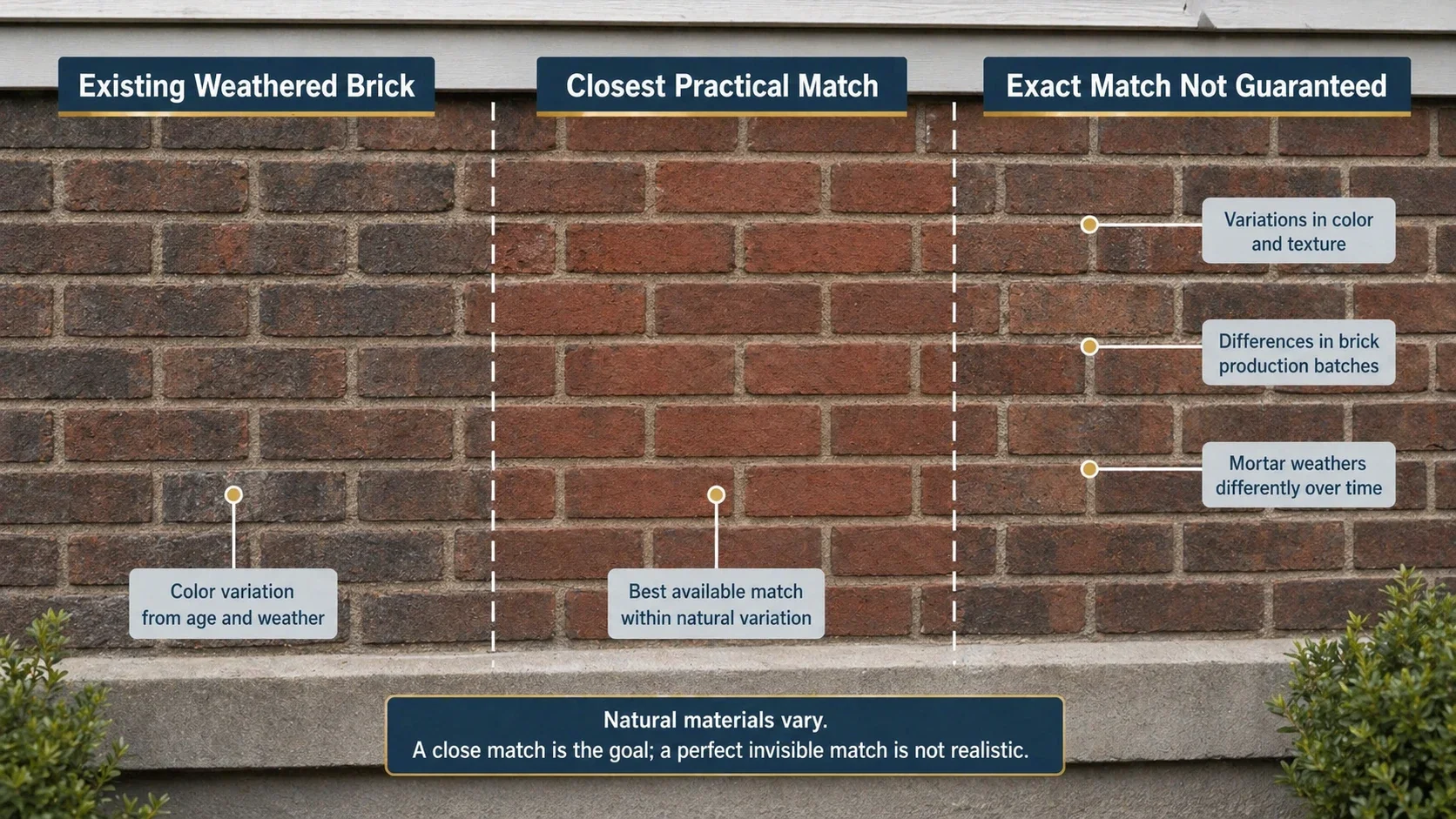
Replacement brick can often be matched closely, but exact matching is not guaranteed. Age, colour variation, weathering, and mortar tone all affect how a localized repair reads once it is complete.
That is why clear photos of the damaged area and the surrounding wall matter. The repair should be judged in context, not from one close-up alone.
What This Means For Your Project
If the spalling is limited and clearly visible, photos may be enough to sort out whether the issue looks localized.
If the damage is chimney-related, access-heavy, or tied to broader moisture trouble, the repair path may be larger than the first broken brick faces suggest.
If you are not sure whether the visible condition is enough to start remotely, see when masonry can be quoted from photos. If the repair still looks small but the job feels heavier than expected, read why small masonry repairs can cost more than expected.
Related Questions
What To Do Next
You do not need to decide on your own whether the spalling is still minor or already a replacement problem. A few clear photos and a short description are usually enough to point the repair in the right direction.